• Skip to primary navigation
  • Skip to main content

Learning Bilingually

con Laura Pantin

  • HOME
  • ABOUT
    • Mission
    • YouTube Videos
    • Media
  • SERVICES
  • BLOG
  • SHOP
    • TPT
    • AMAZON BOOKS
    • FLASHCARDS
      • Cart
      • Checkout
      • My account
    • DOWNLOADABLE RESOURCES
      • Cart
      • Checkout
      • My account
  • CONTACT

Laura Pantin

Staying in the Target Language

June 23, 2020 by Laura Pantin

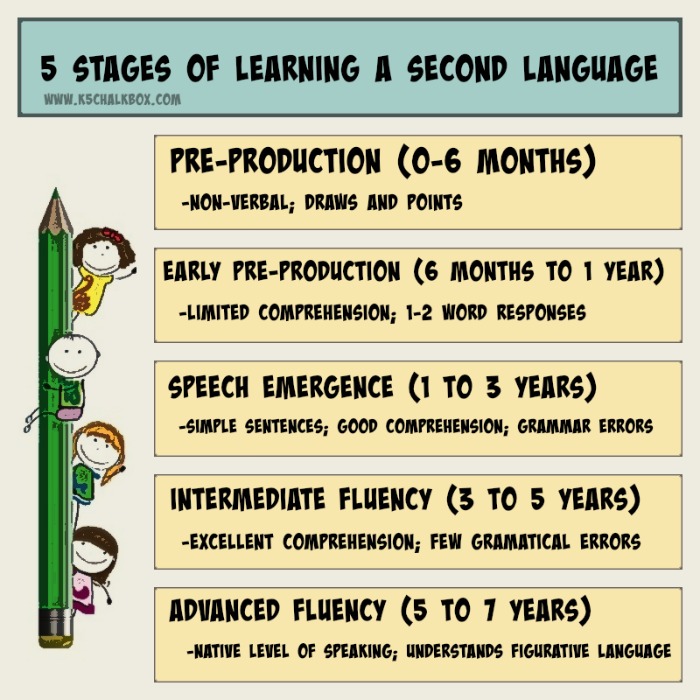
One of the most difficult teaching aspects of being an educator in a Dual Language program is encouraging our students from the very littlest ones to the older ones to stay in the target language when they are on the Spanish side. Something to be cognizant of is that we must remember to be positive and encouraging when it comes to the language acquisition process. Stephen Krashen, a prominent researcher in linguistics, describes the idea of the Affective Filter Hypothesis, which indicates that a number of ‘affective (or social-emotional) variables’ including, self-confidence, motivation and anxiety affect second language acquisition.

Our goal as dual language educators needs to be to create an environment where students feel comfortable, excited, engaged and safe to take risks in order to produce and engage with the target language.

Here are 15 tips to implement in the classroom that can help your students be engaged in and stay in the target language. Many of these tips can be used in conjunction with others from the list:

Tip #1: Set clear expectations – It’s important to establish a target language routine from Day 1 – this also means that you as the teacher are using the TL from Day 1. It’s important that there is clear accountability in our classrooms.

Tip #2: Utilize sentence stems – We need to make sure if we are expecting our students to speak in the target language, we are giving students the language they NEED to communicate. Providing sentence stems for frequently used questions/answers in the classroom, and for their writing and reading responses will elevate the level of comfort students feel using the target language.

Tip #3: Interactive print-rich environment – This means that we aren’t just labeling our environment, but we are creating bulletins and using our board and wall space with interactive word walls, academic language walls, frequently used phrases

Tip #4: Have students create a language journal at the beginning of the year – this can be their own journal of frequently used phrases, or if they don’t know how to say something in the TL, and you show them how, then direct them to write it down in their journal

Tip #5: Use a visual cue to remind students to stay in the Target language – This can be done whole-group or individualized signals as well – your visual cue can be as generic as a holding up a certain # of fingers, or more related to your classroom in the form of an image, picture or physical cue.

Tip #6: Conduct frequent comprehension checks – again this can be done using a visual cue (thumbs up/sideways/down). This allows you to be checking in on your students during your lessons and jot down or address then any confusion.

Tip #7: Incoporating Flipgrid into the classroom – Flipgrid is great to pose questions that allow students to make connections to their own lives, what they’re learning and so much more. As a teacher you can create a teacher account and then create a GRID for each of your classes if you teach different groups of students, and then create and pose questions or activities for your students to do and then they record a video answering. This is great for the students because they can prepare what they’re going to say beforehand and this then reduces the anxiety of being put on the spot to speak in the target language. Rather, this tool provides a digital platform for students to engage with the language, and the other peers can view each other’s videos too, and this can serve for students to get ideas from their peers who might serve as “language models” for them.

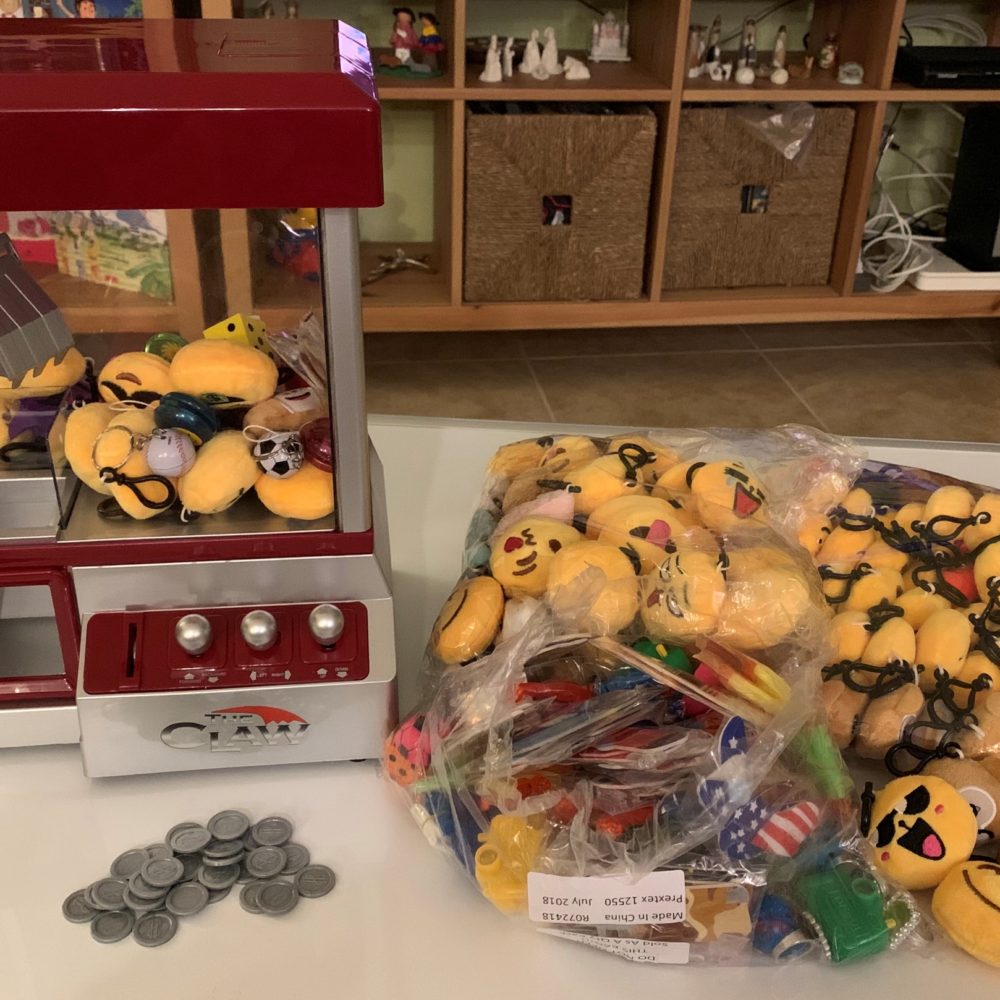
Tip #8: Use individualized incentives charts – With this, each student gets their own small incentive chart with a certain number of stars or smileys and as you hear them using the TL during the day, they get a check or stamp on a star or smiley. When the have their whole card stamped, they get some type of reward. Maybe you have reward coupons or actual prizes. You can use a claw machine for students to try winning a prize or have a treasure box for students to choose their prize after completing their chart. After they have chosen their prize or incentive, then they get a new chart!

Tip #9: Incorporate a whole class reward system -You can have a class jar of pom poms or pebbles or anything and as you hear the TL throughout the classroom you place however many pom poms inside the jar and as they reach certain levels of the jar, they get class incentives.

Tip #10: Incorporate games that encourage language fluency (look at your standards and think, How can we use a game to practice this skill that will have my students talking in the target language? Some great games to adapt for your classroom are: Hedbanz, Pie Face, Guess Who and Jenga.

Tip #11: Secret student method – tell your students you are going to pick a secret student everyday and if that secret student has been using the TL during the day, then they will get a reward at the end of the day. This is a great way to keep your students excitement level high as they will wonder who the student is.

Tip #12: Using Collaborative pairings – This means that you are strategically pairing students to work with another student throughout the day on different activities. For Dual language classrooms, this means pairing a Spanish-dominant child with an English-dominant child so they are each helping each other.

Tip #13: Use technology to give students points when they use the target language – Just like the incentive chart, this method is supposed to be for praising students when they use the target language and it is not meant to be used as punishment by taking points away. This method can be utilized through different apps like Class Dojo, Seasaw.

Tip #14: Use a Password/question/answer system to enter the classroom or go from center to center or however you want to incorporate it – When I taught Kindergarten I had a weekly Password posted outside my classroom, which usually was an important word we had learned and practiced the week before, to keep reviewing it. Students had to say this ‘password’ every time they entered the classroom. This allowed my students to not only practice this vocabulary throughout the day but also begin their entrance in the classroom by feeling a sense of confidence.

Tip #15: Try to incorporate interpersonal speaking activities in your day – these can be short structured opportunities for students to engage in the language. For example, creating opportunities for your students to practice conversations on topics they are learning in class or having a set up where students talk to 4-5 students for about 4-5 minutes each on specific topics you have pre-planned. For example, if your students are learning about text features, then your five topics they talk about can be five different types of text features. The students would talk about one type of text features to one peer, then after the timer goes off, they move and talk to the next peer about the next type of text features.

Remember to utilize comprehensible input, because if students’ affective filter is low, then they will be more apt to risk taking in our classrooms. It’s also important to remember that the language acquisition process is not static and linear, it is can be messy and bumpy and the challenges can sometimes feel insurmountable but you are not alone! There are many strategies we can all implement to truly engage and excite our students to use the target language in our classrooms!
Filed Under: bilingual education, dual language

Interactive Word Walls in Dual Language Classrooms

June 15, 2020 by Laura Pantin

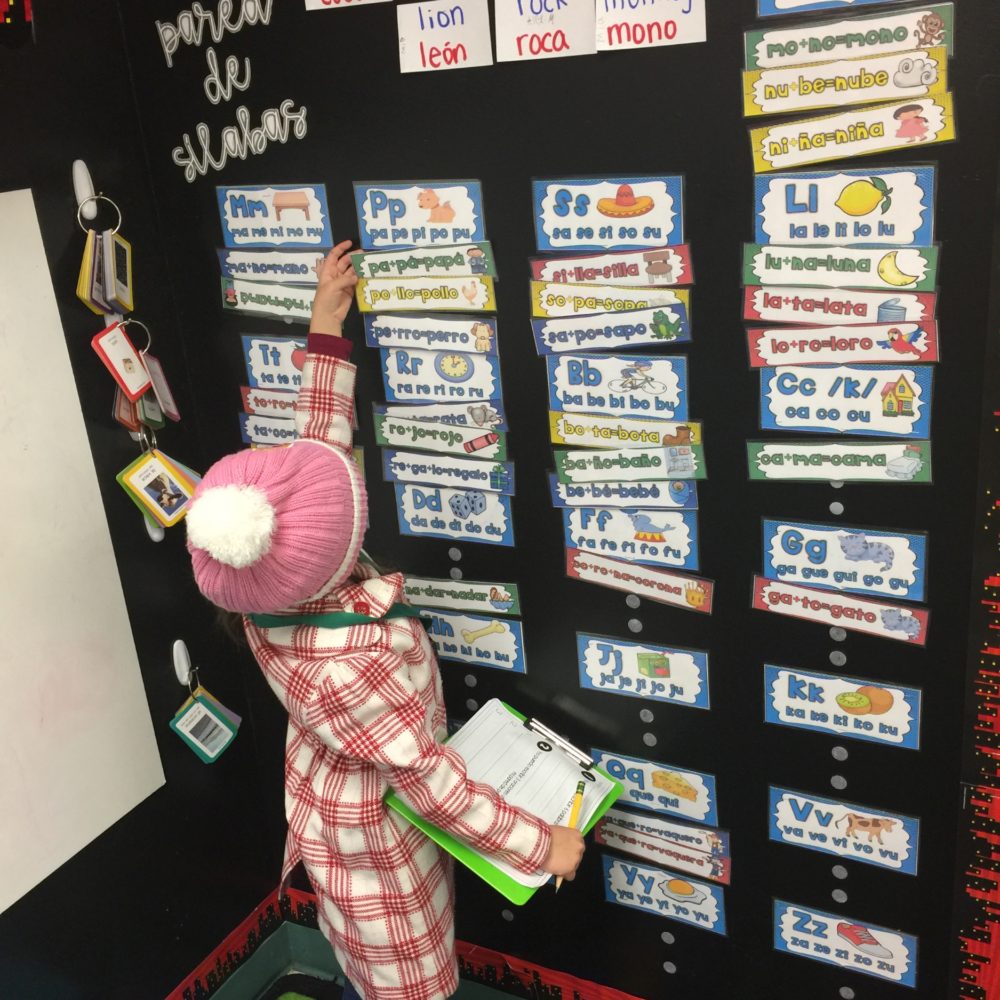
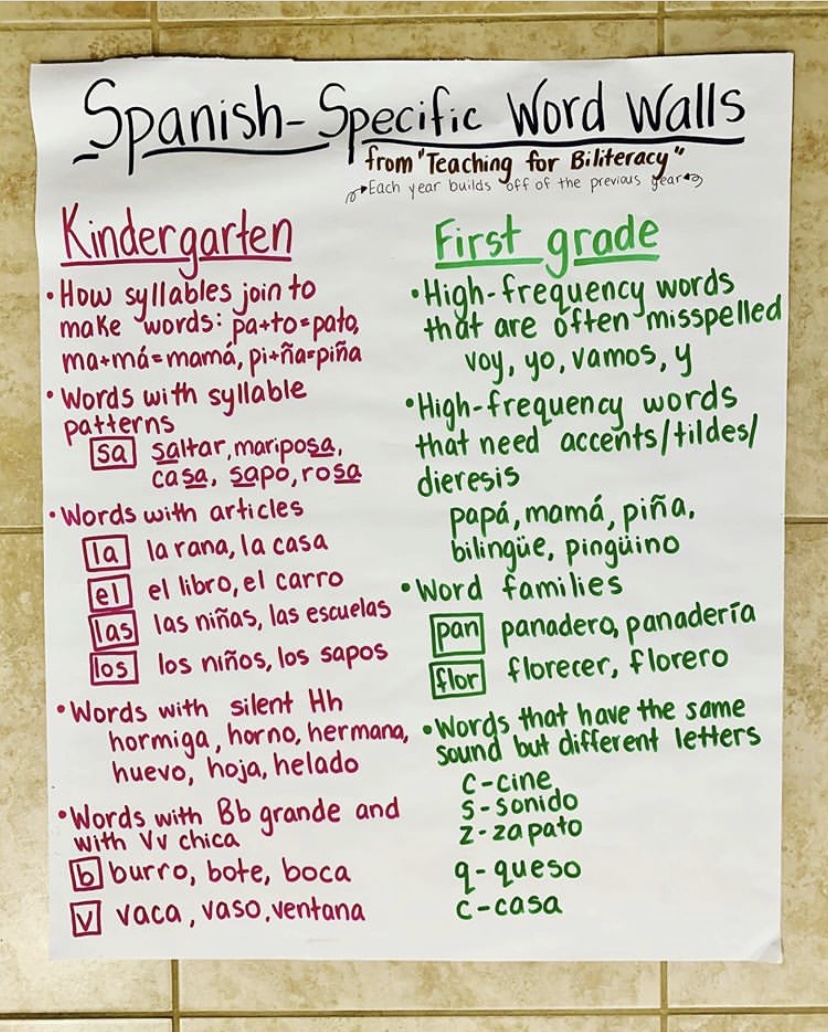
Word walls can be utilized as an integral part of a Dual Language classroom. While in English classrooms, word walls usually are displayed for younger grades as an Alphabet Word Wall, often Spanish language teachers believe that their word walls should mirror those of the English classrooms. However, we must recognize the differences between the languages and understand that an alphabetic word wall in Spanish wouldn’t actually be helpful or useful for our students. Instead, word walls in Spanish classrooms should reflect the Spanish language and should reflect the grade-level language support your students need. It’s important for our word walls to build on students’ language knowledge in content area vocabulary and language structures. The best way to think about how to create a word wall is to look at the Spanish language standards for your grade level and decide what language structures and language skills are the most crucial for your grade level. From there, you can decide what types of word walls would be most useful for your children. I also want to emphasize two things – (1) you can have more than one type of word wall in your classroom and (2) word walls are most effective when they are interactive and student-centered/student-made.

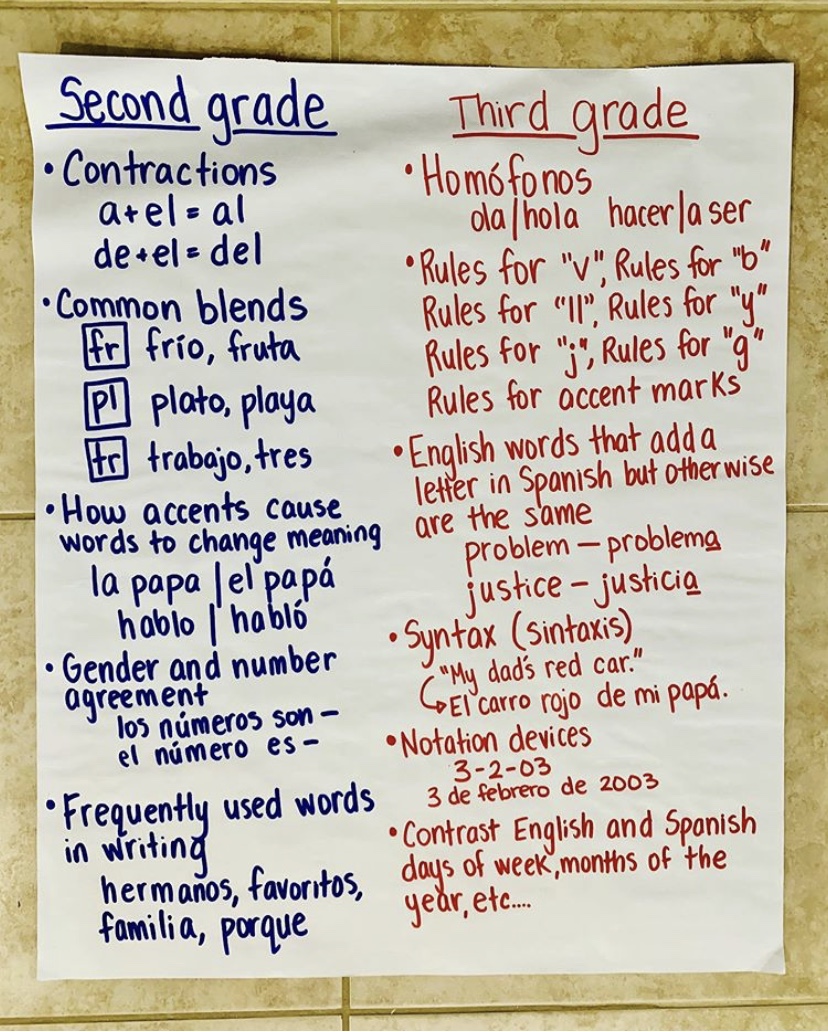
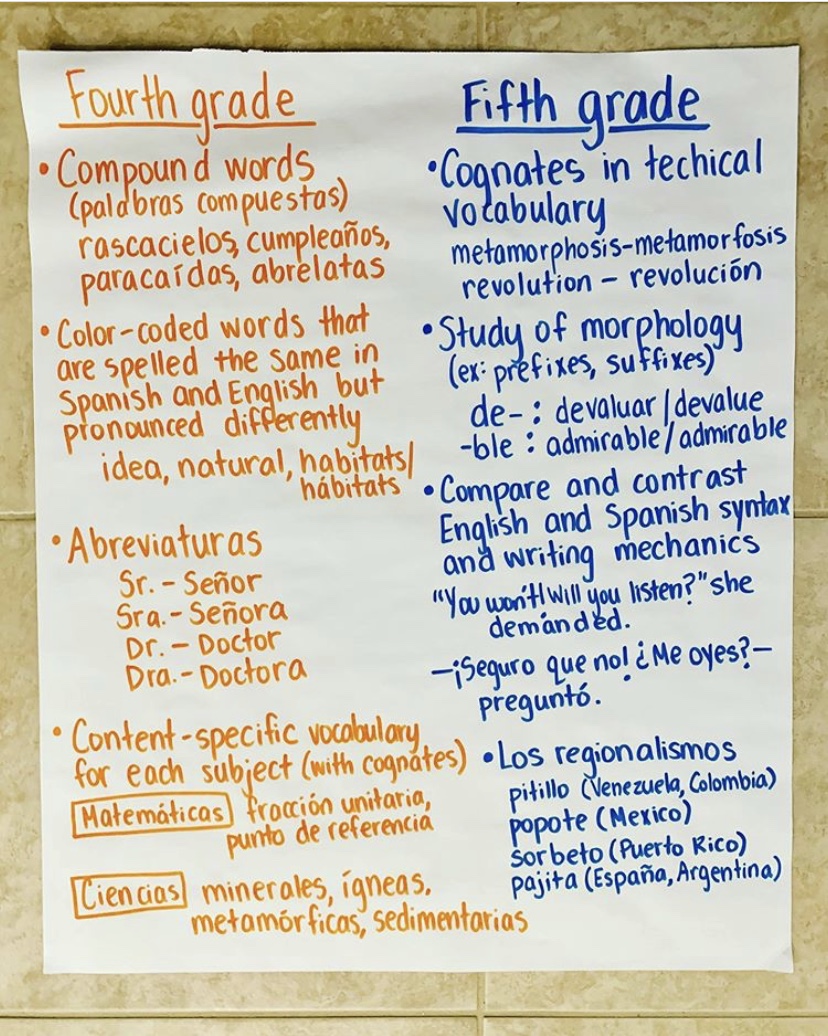
In “Teaching for Biliteracy”, authors Cheryl Urow and Karen Beeman share different types of word walls that would be more appropriate for Spanish dual language classrooms. Here are some suggestions from their book on different grade-level word wall ideas:

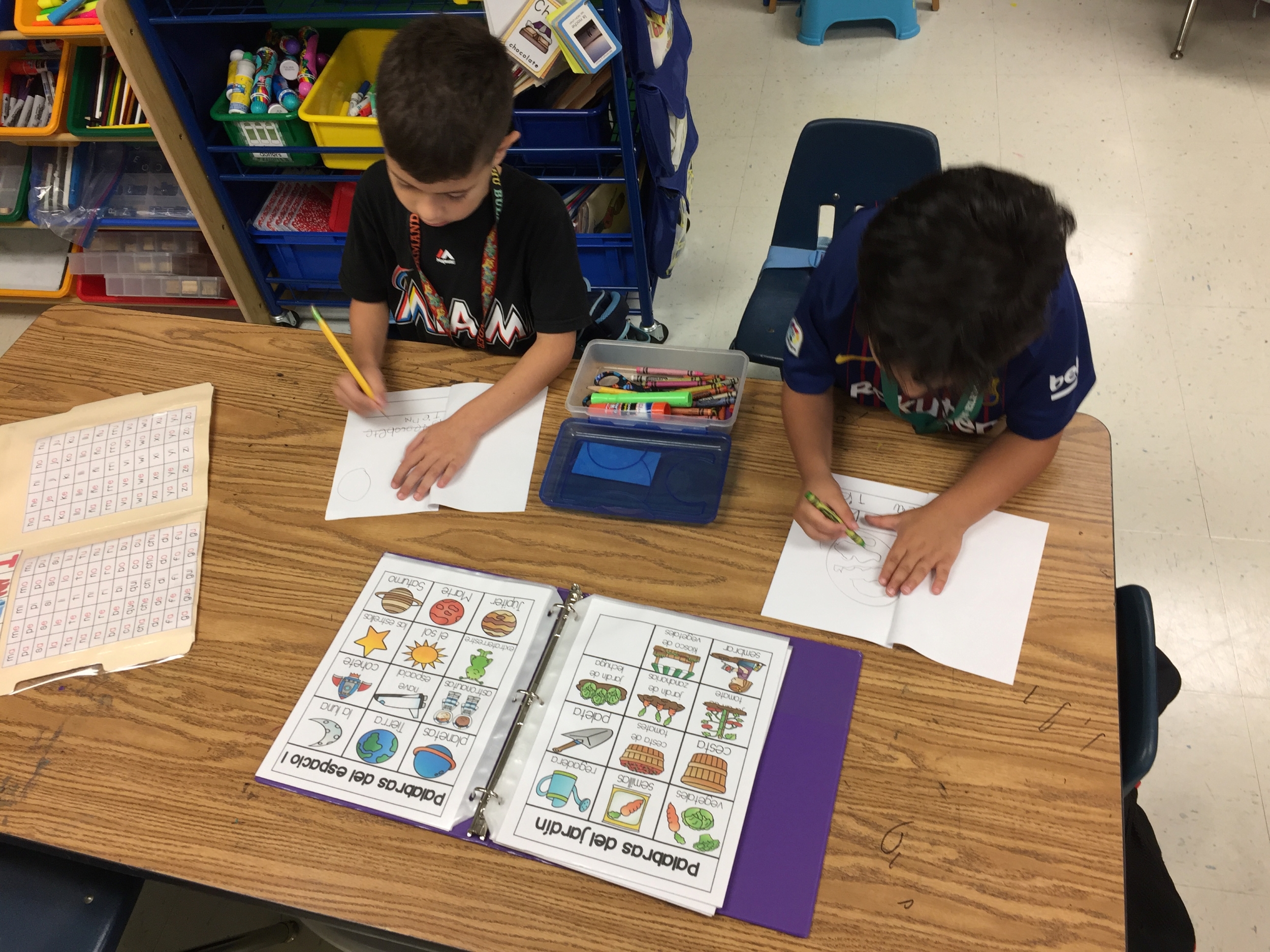
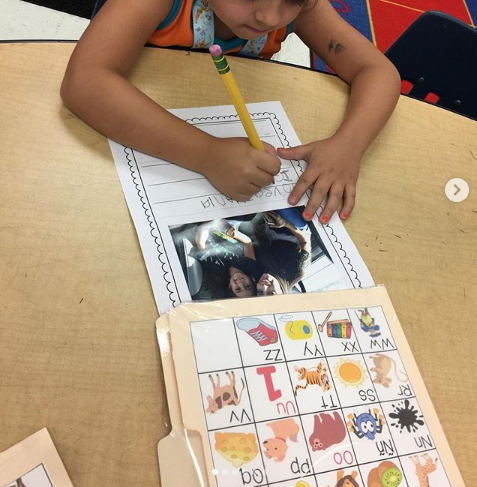
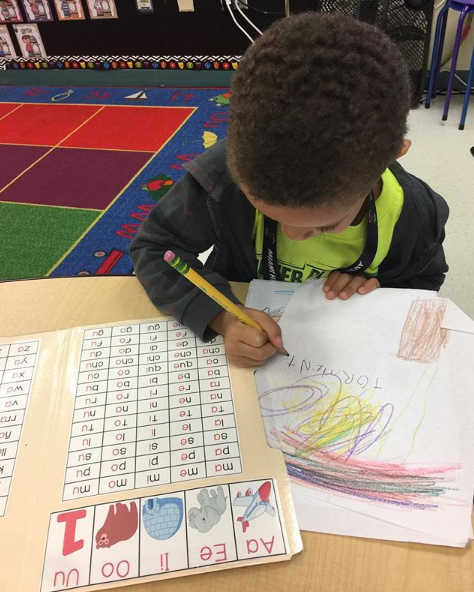
When I taught Kindergarten Dual Language, I had an interactive syllable word wall and a student-created cognate word wall. The interactive syllable word wall was organized starting with the first syllable combinations we learned (ma, me, mi, mo, mu) and then the next combination we learn and so for so the wall was organized in the sequence that I taught the syllable combinations. As we learned vocabulary for that syllable combination, I would Velcro cards with those vocabulary words (and of course with an image of the word!) and students would use this wall for their writing and reading. They were able to grab the word off the Velcro and take it to their seats to use during their writing. The cognate student-created word wall began by me doing a mini-lesson on what cognates are and why they are important in our language learning journey and how cognates help us! Then, I told the students they would be cognate detectives the rest of the school year. When they recognized a cognate from our lessons or content information, or when they simply thought of a cognate, then I would write it for them in English (blue) and in Spanish (red) and they would sign their name on the card and I would hang it up on the wall. The students loved taking ownership of this and loved seeing how many words they had come up with!

It’s important to note that ‘word walls’ shouldn’t be exclusive to things stapled to a wall. Word Walls can be anything from anchor charts with content specific vocabulary that students can manipulate and interact with, to magnetic words on your dry erase chart that students can grab and take to their seats, so personalized word wall folders and student-created dictionaries.

Word Walls can be an extremely valuable part of our Spanish dual language classrooms – as long as we are implementing them in a way that aligns with the Spanish language and in a way that is most optimal for our students!


Filed Under: organization, word walls

Where to Buy Spanish Books Online

June 5, 2020 by Laura Pantin

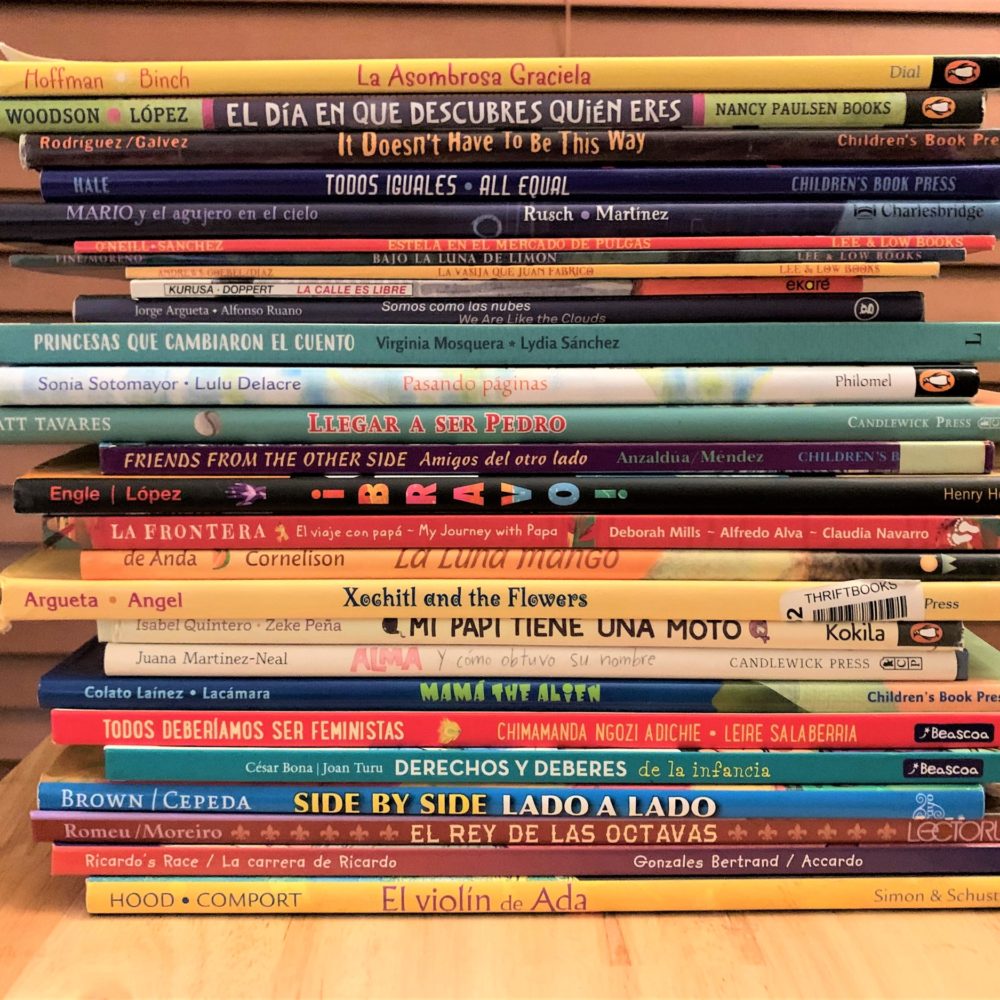
It’s hard sometimes to find authentic and engaging Spanish texts online for our own classrooms. Many parents often ask where they can buy Spanish texts for their own home as well. I’ve compiled a list of websites where you can find some great Spanish books online:

  • Lee and Low Books: https://www.leeandlow.com/
  • Lectorum: https://lectorum.com/
  • Books del Sur: https://booksdelsur.org/
  • La Libreria: https://www.la-libreria.net/
  • Arte Público Press: https://artepublicopress.com/browse-and-order-books/
  • Syncretic Press: https://syncreticpress.com/
  • BMI/AKJ Education: https://www.akjeducation.com/spanish
  • Lil’ Libros (for prek/K level): https://lillibros.com/collections/books
  • I Love to Read in Spanish: https://www.ilovetoreadinspanish.com/
  • Cinco Books: https://cincobooks.com/
  • TPRS Books
  • Booksource
  • Amazon (Search: “children’s books in Spanish”, “libros en español para niños”): https://www.amazon.com
  • Barnes & Noble
  • First Book Marketplace
  • Usborne Books and More (Independent Consultant)
  • Barefoot Books
  • Reading A-Z (can buy a yearly subscription for downloadable books): https://www.readinga-z.com/

Click here to download: Lists of Diverse Books in Spanish

Filed Under: bilingual education, books, dual language

Online Tools in Spanish for Dual Language Classrooms

May 30, 2020 by Laura Pantin

In this video I share some of my favorite high-quality online tools in Spanish that I utilized with my own students in the classroom as well as during Distance Learning. By no means is this an exhaustive list of resources and online tools, just some of my favorite ones to utilize:

Books online:

  • https://uniteforliteracy.com
  • https://www.readconmigo.org
  • https://maguare.gov.co/
  • https://www.wilbooks.com/
  • https://www.readinga-z.com/
  • https://www.getepic.com/

Interactive Websites:

  • https://arbolabc.com/
  • https://www.mundoprimaria.com/
  • https://juegosinfantiles.bosquedefantasias.com/
  • https://rockalingua.com/

Math:

  • https://es.khanacademy.org/
  • https://www.splashlearn.com/

Reading comprehension:

  • https://www.commonlit.org/
  • https://lingua.com/

Grammar:

  • https://conjuguemos.com/
  • http://www.reglasdeortografia.com/
  • https://aprenderespanol.org/

Oral Language:

  • https://info.flipgrid.com/

Filed Under: bilingual education, dual language

Consejos para familias que no hablan inglés en casa

May 21, 2020 by Laura Pantin

Muchos padres tienen incertidumbres sobre si deben criar hijos bilingües en los Estados Unidos. A menudo parece que el idioma de poder y prestigio en este país es el inglés. Pero poco a poco esto está cambiando. Como personas hispanas, tenemos que reconocer el verdadero valor de que nuestros hijos/hijas mantengan su idioma nativo y no dejarnos llevar por una perspectiva asimilacionista que considera que no es estadounidense hablar otro idioma además del inglés. En cada momento que pasa tenemos que ver lo esencial, lo bello y lo importante que es ser bilingüe o multilingüe en nuestro mundo.

Ahora, quizás te preguntes, “¿Qué hacemos si no hablamos inglés en casa? ¿Sufrirá el progreso académico de nuestro hijo?” Padres, ¡no se preocupen! En este post voy a ofrecerles algunos consejos para familias que no hablan inglés en casa.

Primero, es extremadamente importante saber que las investigaciones han demostrado continuamente que tener una base sólida en nuestro idioma nativo realmente nos ayuda a aprender un segundo idioma. Entonces, si pudiera dar el consejo más importante es sigue hablando, leyendo y escribiendo en tu idioma nativo en casa. Si ustedes son una familia que crecieron hablando español y quieren mantener y ayudar a desarrollar el español en sus hijos, sigan hablando, leyendo y escribiendo en español en casa. Lo más importante es ser persistente y consistente con el español en casa, incluso durante esos momentos en que sus hijos se resistirán y tratarán de hablar con usted o con uno de ustedes en inglés. ¡No se rindan! Sera difícil, será frustrante, pero todo el esfuerzo vale la pena. 

Yo me mudé a los Estados Unidos cuando tenía 6 años con mis padres y mi hermana. Cuando ingresé por primera vez en primer grado, no quería hablar inglés porque me sentía aislada en mi propia clase. Pero rápidamente cuando aprendí inglés en la escuela, mi mentalidad cambió y solo quería hablar en inglés porque así me comunicaba con mis compañeros, maestros y en el vecindario. El inglés me rodeaba y quería ser parte de él. Pero mis padres mantuvieron un esfuerzo persistente en casa para que mi hermana y yo pudiéramos hablarles solo en español. Cuando intentamos hablar con ellos en inglés, recibimos la respuesta, “¡No entiendo!” de mis padres, que inevitablemente nos obligó a tener que decirlo en español. Estaba frustrado entonces, pero ahora estoy muy agradecida.

Otro consejo que tengo es que usen el idioma nativo de una manera fluida y natural porque ahí es donde ocurre la verdadera adquisición y aprendizaje del lenguaje. Cuando estén en el carro, pídale a tu hijo/hija que te cuente lo que ve mientras conduces, hazles preguntas o cuando se esté preparando para ir al supermercado, pídale a tu hijo o a tu hija que escriba la lista de compras en el idioma nativo (¡no se preocupen, la ortografía no será perfecta, pero está bien, están poniendo en uso las destrezas fundamentales del idioma de manera significativa!). En casa para que tu hijo/hija practique palabras importantes o palabras específicas de contenido que están aprendiendo en la escuela, coloquen tarjetas o papelitos por toda la casa y hagan una  búsqueda de tesoros, ósea una búsqueda de las palabras o frases y una vez que encuentran una la tiene que decir en voz alta o también para los más grandes pueden decir su definición o la usan en una oración, pueden buscar la siguiente palabra. También, encuentren libros hermosos en español para leer juntos por la noche y para iniciar algunas conversaciones con su hijo, hija sobre el libro, el mensaje del libro, lo que está pasando en el libro etc. Hay muchas maneras de hacer que el aprendizaje de idiomas y la práctica de nuestro idioma nativo sea divertido en casa.

Adicionalmente, otro consejo sería que utilicen el contacto de ESOL/Bilingual/Dual Language de la escuela de sus hijos/hijas. Ese contacto está ahí para ayudarlos navegar el sistema educativo y también para ofrecerle apoyo (sean recursos como diccionarios, sitios en línea, libros, etc.) para ayudarlos tanto a su hijo/a como a ustedes como familia.

Además, si su hijo está inscrito en un programa de lenguaje dual, no tenga miedo de utilizar a las personas en el programa como recursos para su hijo y su familia. Esto puede significar conectarse con otras familias en el programa para que su hijo continúe practicando su español y su inglés a través de fechas virtuales de juego, reuniones o fechas de estudio. También puede conectarse con esos padres y dado que todos comparten la misma experiencia de tener a su hijo en un programa de lenguaje dual, ¡tendrá mucho de qué hablar!

Realmente lo mejor que pueden hacer es valorar el idioma nativo – muéstrenle a sus hijos e hijas la belleza de su idioma nativo, la importancia de saberlo para poder comunicarse con sus abuelos abuelas familia etc. y háganlo divertido e interactivo.

Aquí también ofrezco ideas para continuar la práctica de español en casa, de manera divertida:

  • Lean libros en español
  • Lean cuentos sin palabras y deja que tu hijo/a escriba el cuento que el/ella ve a través de las imágenes
  • Canten canciones, rimas
  • Vaya a la biblioteca para buscar libros en español/libros bilingües
  • El lenguaje se adquiere con interacciones significativas – hablan mientras cocinen, hablen mientras vayan a la tienda, hablen mientras juegan…. ¡Hablen, hablen y hablen!
  • Hagan tiempo cada semana para que su hijo hable con los abuelos u otros miembros de la familia que hablen español, incluso si es solo por un par de minutos (¡por teléfono, video, aunque sea posible!)

Claro, hay páginas del internet y aplicaciones para los teléfonos o las tabletas para practicar las destrezas del inglés, y claro hay más de estas aplicaciones en ingles que están disponibles que en español. Si sienten que su hijo o hija necesita más refuerzo con el inglés, usen estas herramientas. Pero recuérdense que los niños obtendrán el idioma mayoritario, el inglés, a través de sus tareas de inglés y una vez que hayan regresado a la escuela, a través de todas sus amistades, y por todos lados que uno vaya. No hay ningún problema con mantener la idea que: en esta casa, se habla español.

Filed Under: families

Tips for Families Who Don’t Speak the Target Language at Home

May 21, 2020 by Laura Pantin

Many families who place their child in a Dual Language program but don’t speak the target language at home might feel overwhelmed at times. If you are one of those parents you may be wondering, “What do we do if we don’t speak the Spanish at home?” “Is there any way we can support our kids at home if we don’t speak Spanish?” “Did I make the right decision in placing my child in this program?” “Will my child be successful in the program if no one at home speaks Spanish?”

Parents – it’s okay! First, remember that language learning is a long journey and while there will be hurdles, the amazing growth you will see in your child will be beautiful. Even though you may not speak Spanish at home, your child still needs your support at home! There are many things you can do at home to support your child’s bilingual journey. Here are some tips:

  • Show/model that you value the target language at home – kids will pick up on this!
  • Set strategic and realistic goals for your family
  • Consistency is key – it’s a journey that takes time, patience and persistence
    • Studying for 15-20 minutes a day is better than 2 hours on one day – where your child will likely lose focus anyways!
  • Don’t worry so much about grammar – HAVE FUN!!
  • Have students create a language journal (using a composition notebook/spiral notebook) where they write in words/phrases in the target language and an illustration of the image (it will become their own personal dictionary of sorts!)
  • Practice phrases you frequently use (add them to your journal)
  • Use the language as often as possible
  • Have Spanish/English dictionaries, cognate dictionaries, academic language dictionaries/glossaries at home
    • New York University (NYU) has free online glossaries in a ton of different languages for different subjects/grade levels: https://research.steinhardt.nyu.edu/metrocenter/resources/glossaries
  • Listen to tv shows, movies, podcasts and music in the target language
    • Create a Spotify or itunes music bilingual/Spanish playlist for your child!
  • Language is FOR COMMUNICATION so talk to anyone you can that speaks the target language
    • Create as many opportunities as possible to speak the language and interact with native speakers or other bilingual children and families
  • Spend time IN the language, not just “learning about the language”
  • Younger kids- Speak and listen to the language as much as you can
  • Older kids- speak listen, read and write the language as much as you can
  • Parents – join a forum (The Bilingual Zoo) or a Facebook group where you can connect with other parents and families in similar situations
  • Connect with the other families in your Dual Language program and set up virtual play dates, hang outs, or study dates to help your child practice the target language and for parents to get that support from other parents in the same program
  • The more exposure your child has, the more things will get easier and start making more sense

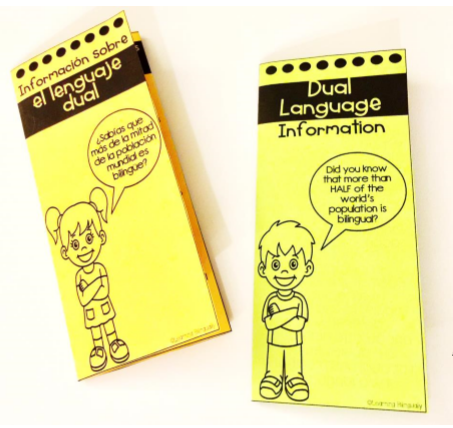
Check out this free Dual Language Information Brochure for Parents

Filed Under: bilingual education, dual language, families

« Previous Page
Next Page »

Before Footer

Copyright © 2026 · Wellness Pro on Genesis Framework · WordPress · Log in