• Skip to primary navigation
  • Skip to main content

Learning Bilingually

con Laura Pantin

  • HOME
  • ABOUT
    • Mission
    • YouTube Videos
    • Media
  • SERVICES
  • BLOG
  • SHOP
    • TPT
    • AMAZON BOOKS
    • FLASHCARDS
      • Cart
      • Checkout
      • My account
    • DOWNLOADABLE RESOURCES
      • Cart
      • Checkout
      • My account
  • CONTACT

Laura Pantin

Family & Community Support

May 18, 2020 by Laura Pantin

No Dual Language program can be successful without a strong relationship between the families of the children, their teachers, the school and the community. It goes without saying that anything is more successful the more support and “buy-in” there is, and that holds true for dual language programs. There should be various levels of parent and family involvement in order to strive for success.

First, all dual language programs should review and become familiarized with the Guiding Principles for Dual Language Education – Strand 6 – Family and Community. This strand highlights the important features of family and community engagement and includes these principles and sub-categories:

Principle 1: The program has a response infrastructure for positive, active, and ongoing relations with students’ families and the community.

  • (A) There is a staff member designated as liaison with families and communities associated with the program.
  • (B) Office staff members have bilingual proficiency and cross-cultural awareness.
  • (C) Staff development topics include working equitably with families and the community.

Principle 2: The program has parent education and support services that are reflective of the bilingual and multicultural goals of the program.

  • (A) The program incorporates ongoing parent education that is designed to help parents understand, support, and advocate for the program.
  • (B) The program meets parents’ needs in supporting their children’s education and living in the community.
  • (C) Activities are designed to bring parents together to promote cross-cultural awareness.
  • (D)Communication with parents and the community is in the appropriate language.
  • (E) The program allows for many different levels of participation, comfort, and talents of parents.

Principle 3: The program views and involves parents and community members as strategic partners.

  • (A) The program establishes an advisory structure for input from parents and community members.
  • (B) The program takes advantage of community language resources.

These components are crucial in the success of a dual language program. I’ve thought a lot about parent/family involvement and education on dual language programming as well as how reaching out to the community can truly help a program be successful. I’m going to outline several ways to involve families and the community more in relation to your dual language program.

  • Hold a “Mandatory Dual Language Information Session” for families who are interested in signing up their child for the Dual Language Kindergarten class
    • This is extremely important because many families tend to sign up their child for these programs without really understanding the structure of what ‘dual language’ really is, or without understanding the commitment and the effort it requires on their part for their child to be successful
  • Dual Language Program Contract
    • Have a contract where parents need to sign to show their commitment to the program. Below you’ll see this example that I created
  • Dual Language Informational Sessions throughout the year (2-4 sessions per year)
    • Topics can include dual language 101, specific sessions related to your school’s program, stages of second language acquisition, how to help your child at home, etc…
  • Designate a Dual Language Liaison for your school’s program
  • Create a Parent Dual Language Advisory Committee
    • This should be a way for the parents to have some input and advocacy for the program with a designated parent or several parents to communicate with the school/program
  • Community Fundraising/outreach events for your school’s dual language program
  • Partnering with community organizations that support bilingualism/provide target language resources/activities for the community
  • Inviting parents as “mystery” guests (for read-alouds) or to share cultural activities in the target language
  • Dual Language Program Yearly Showcase (this can be adapted to a virtual showcase)
    • Having a showcase where each grade of the Dual Language program has their students showcase a project or an activity they did and they chose (from their ‘portfolio’ of projects/activities) to share with parents, families, teachers, community members.

There are many ways to effectively involve parents and the community to support student success in a long-term program like Dual Language. It’s also important to make sure that a school is welcoming and receptive of the other languages of the school, especially the languages most spoken other than English in the school and community. Making sure that the parents and families feel welcome allows for them to feel comfortable becoming more involved in their child’s education and in the dual language program. Don’t be afraid to work with parents to provide the kids with amazing learning experiences!
Filed Under: bilingual education, dual language

Program Schedules & Organization

May 17, 2020 by Laura Pantin

An extremely important part of any successful dual language program is…organization! And for us that has meant schedules upon schedules upon charts and more charts! For teachers in dual language programs there are several different things you have to consider before making curriculum-oriented decisions. If you teach two groups of students, you have to consider: the language allocation plan (daily split, weekly split, roller coaster model?), how your literacy rotations will look like for both groups throughout the week, how your math rotations will look like for both groups, which teacher is teaching what for a specific unit and when (for side-by-side models) and so much more.

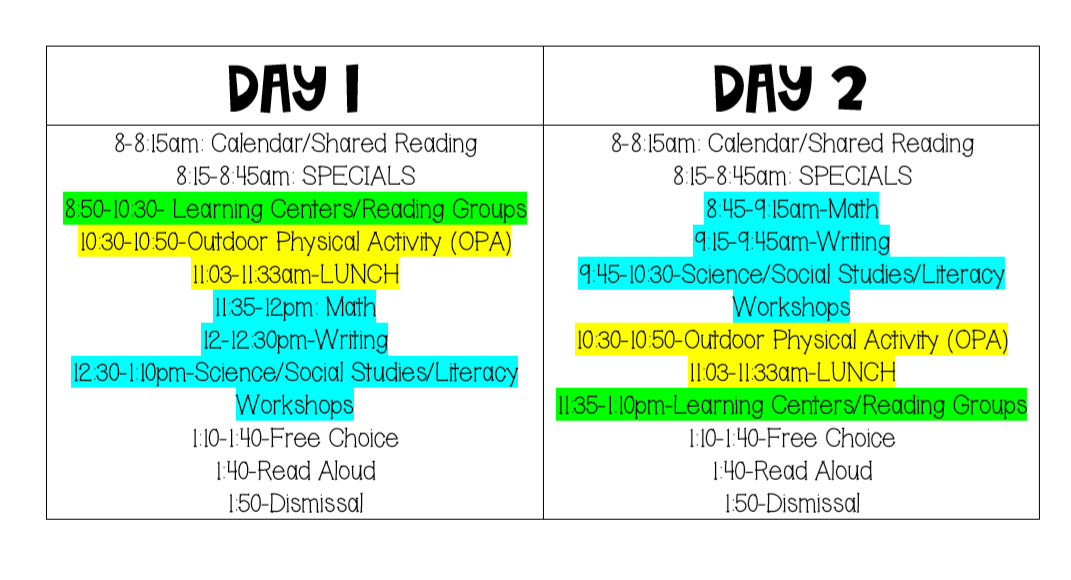
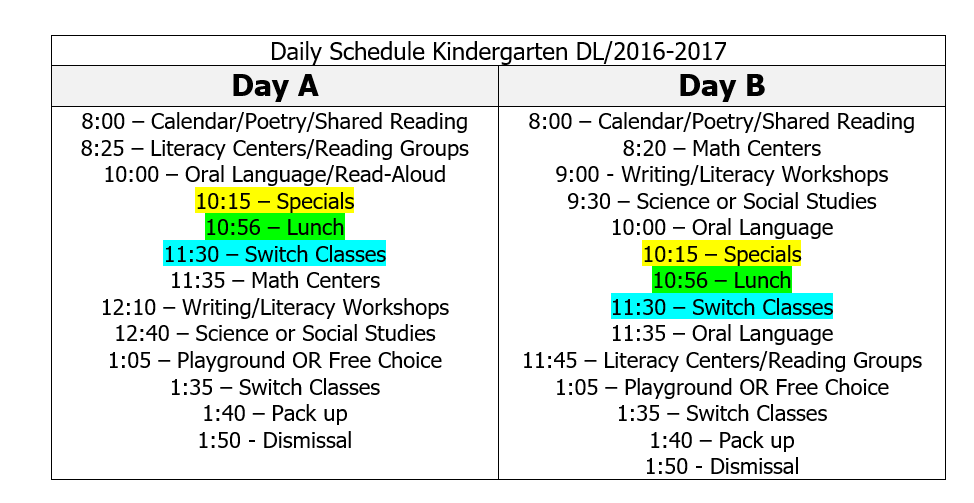
First, we create a rough “daily” schedule of how our day/days will look like. For Kindergarten we created a sort of block schedule with a Day A and a Day B. The idea is that you and your partner teacher are both following the same Day schedule. So, for example:

Monday: Day A; Tuesday: Day B; Wednesday: Day A; Thursday: Day B; Friday: Day A

Monday: Day B; Tuesday: Day A; Wednesday: Day B; Thursday: Day A; Friday: Day B

This format that we followed also meant that we started with the same group of students each morning (our “homeroom”) and that we always switched after lunch to our other group of students. For the early grades (K-1st especially), it is important for the students to be receiving daily instruction in both languages. This means that switching halfway through the day is the most optimal scheduling way to achieve this. This block schedule also allowed for us to make sure we weren’t repeating any content or lessons but rather have a fluidity amongst the two classrooms.

Basically, let’s say DAY A is on Monday, then both myself and my partner would be doing Calendar/Poetry/Shared Reading, and our Literacy Centers/Reading Groups at the same time, just with our own respective group of students. THEN, that same day, we would switch groups of students after lunch and we would both then doing Math Centers, Writing/Literacy Workshops and our Science or Social Studies lesson with our afternoon group of kids! Then, on Tuesday, we would both follow the DAY B schedule (which is basically Day A, flipped – which assures then that our ‘homeroom’ group of students is getting their Math, Writing, Science/Social Studies in the other language and your afternoon group of kids is getting their Calendar/Poetry/Shared reading and Literacy Centers/Reading Groups in the other language). An example of our schedule is:

Yes, this means that my partner and I would have to be very much in sync and work closely together to make sure we were both on schedule.

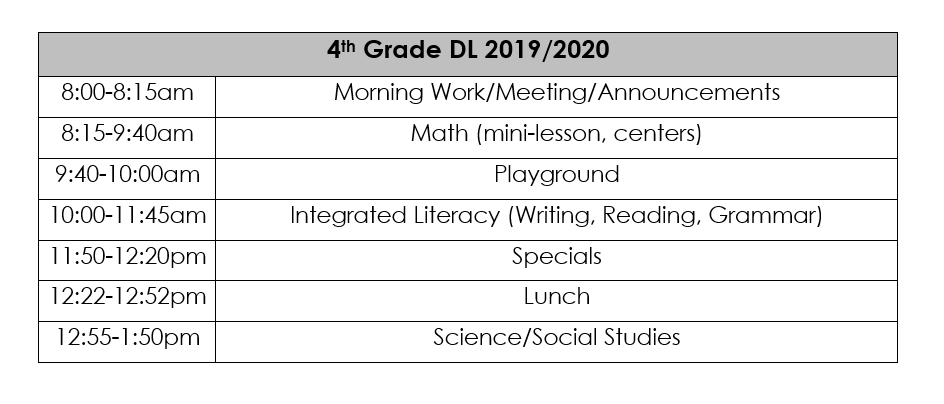
Now for our 4th grade schedule my partner and I decided that it was better to have a full day with each group of students because the content and curriculum in the upper grades required longer periods of time. So our schedule is more “simple” but that by no way means it is any less intense! We are nonstop all day making sure we make the best of the the day we have with the kids.

Here is the rough schedule we followed:

In addition, for our math curriculum, we teach our math chapters utilizing Math Centers, so we have a whole separate chart for that. At the beginning of the unit, we rip the chapters out and send them home so students can work/practice at home with their parents and that way, the parents know the vocabulary we are using in class and they can also see what their child is learning in school!

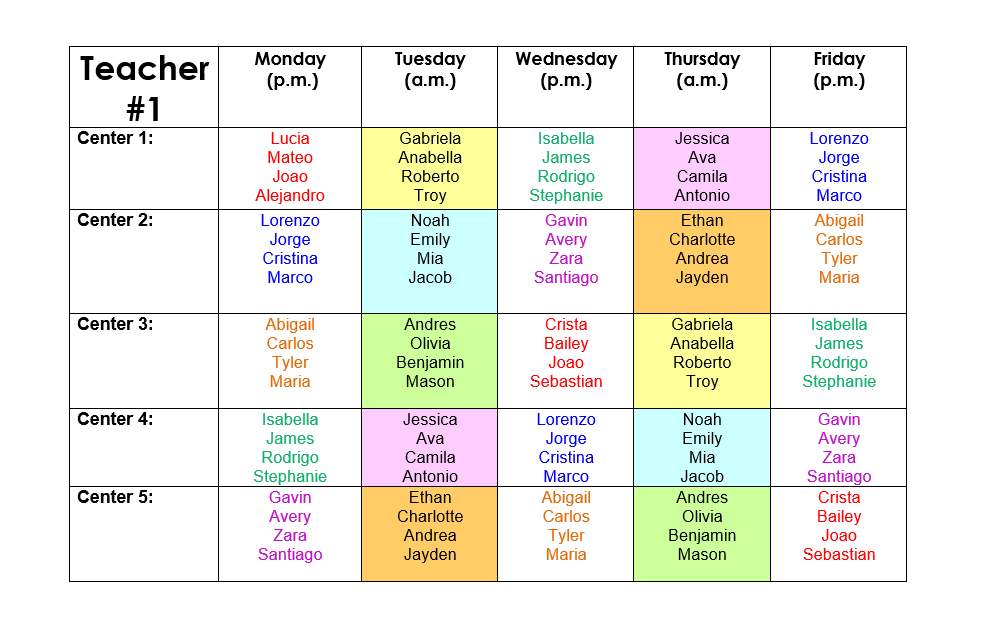
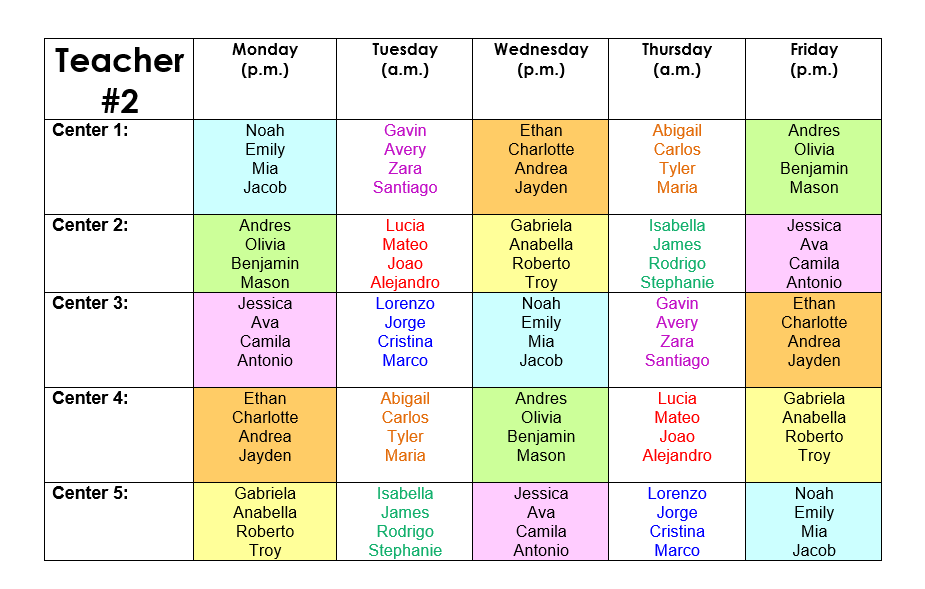
Basically, we decided that we would teach 5 centers at a time for the math skill we were working on, meaning, that both my partner and I would have the same math centers happening in each of our rooms, but we have students go to ONE center per day in one language and then the next day they go to the next center in the other language, and so forth. Basically, each group will get, out of those 5 centers, 2 in Spanish and 3 in English OR 3 in Spanish and 2 in English. Here is a sample of one of our math charts:

As you can see, the children move to the next center the next day, just in the OTHER language. For example, imagine Group 1… This will be Group 1’s rotation through the math centers for that skill/chapter:

Monday: CENTER 1 – English

Tuesday: CENTER 2 – Spanish

Wednesday: CENTER 3 – English

Thursday: CENTER 4 – Spanish

Friday: CENTER 5 – English

This way, they are all receiving all of the math skills, just half of the time they are receiving them in Spanish and the other half in English. We also run our classrooms this way to ensure that we are being as efficient as possible with the time that we have with each group (we really only have about 2 hours with each group) AND to ensure that we aren’t repeating any content!

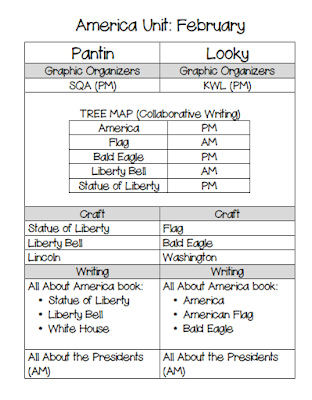
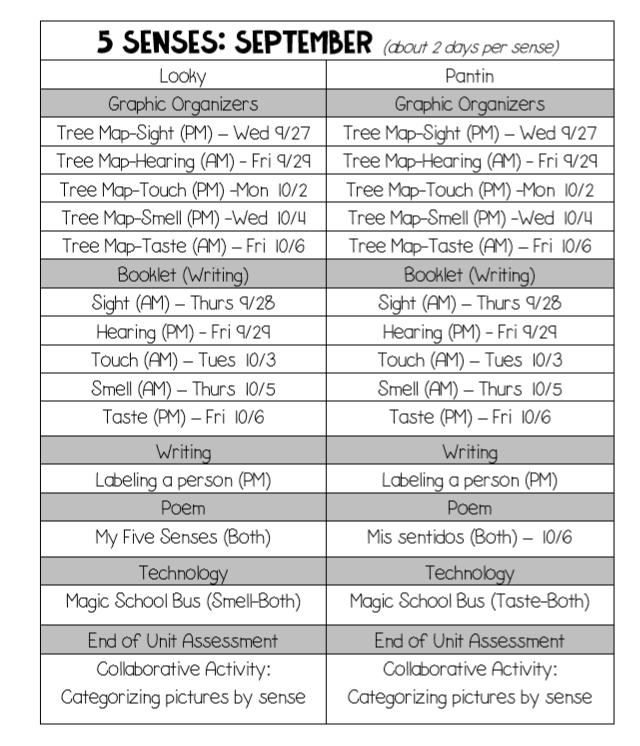
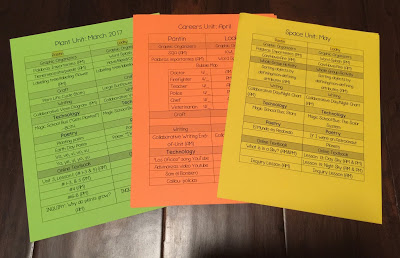
Finally, we have our VERY important thematic unit charts! For Kindergarten, we teach our standards through thematic units and for each thematic unit we created a Unit Chart where we specify what graphic organizers, writing activities, collaborative group activities, technology (videos, songs) and poetry we will be doing with which group of students and in which language! For this purpose, we call our morning group of kids our AM group and our afternoon group of kids our PM group and I am “Pantin” (the Spanish side) and my partner is “Looky” (the English side). Here is a sample of one of our unit charts:

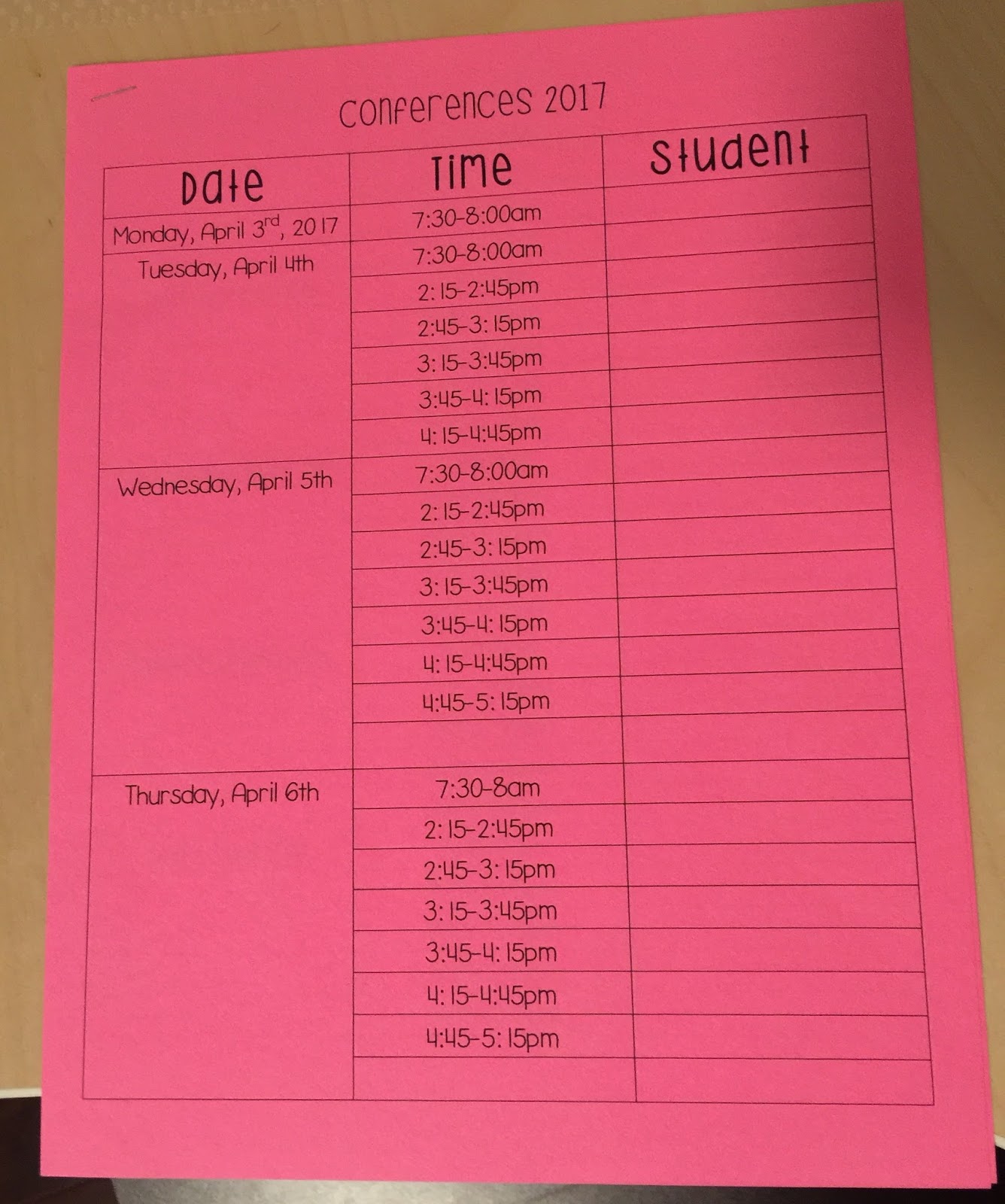
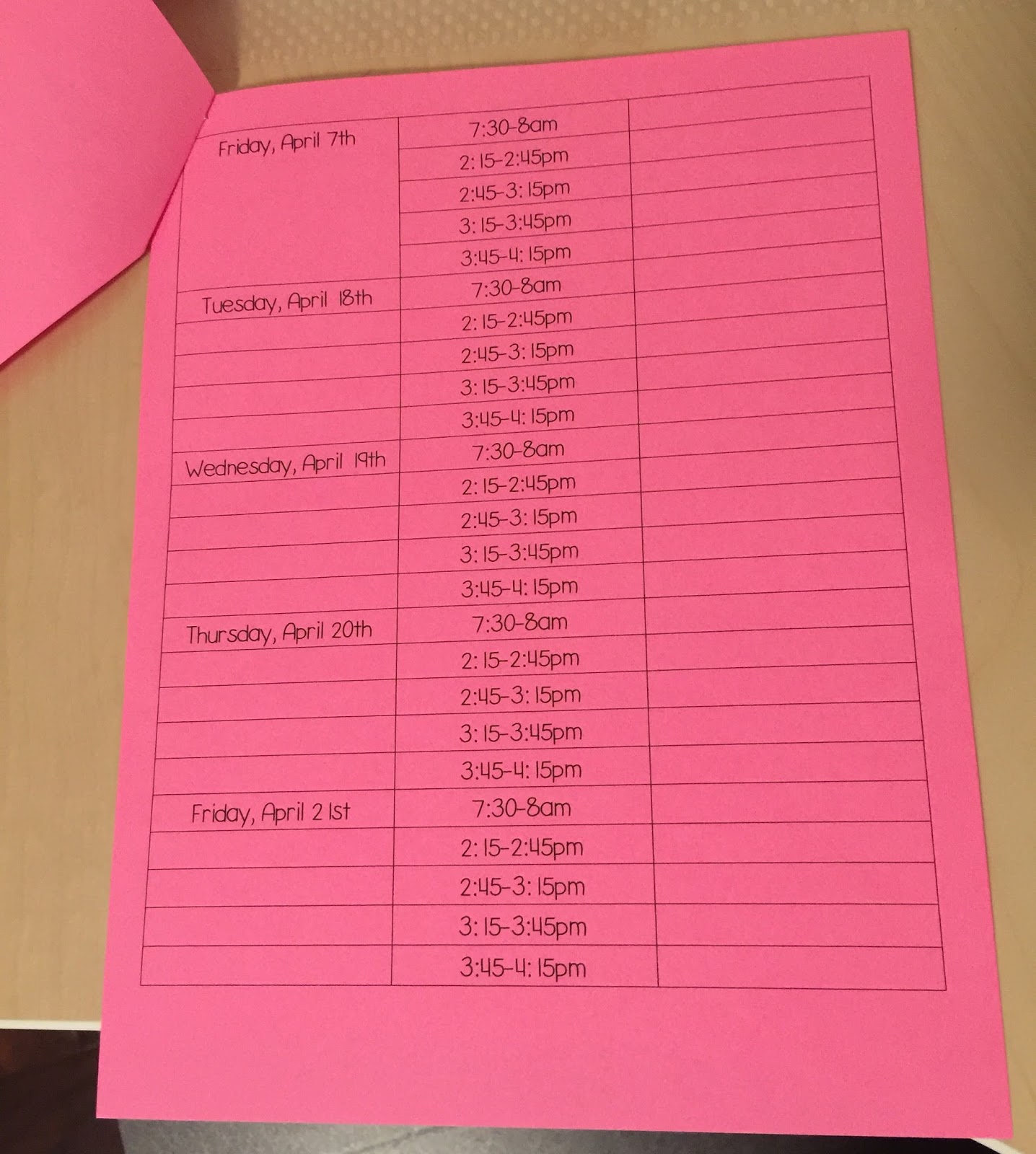
Finally, my partner and I do all 40 conferences together, since we are both teachers to all 40 of our kids! Therefore, when conference time comes around, we create this chart designating the time slots for our parents to sign in and then our Room Parent puts these dates and times on the class Sign-Up Genius (https://www.signupgenius.com/). Once all the parents have signed up, we write in each parent’s/student’s name on the box next to the time and we have this handy throughout our conferences so we are on-task with which parent is next and the order of our conferences! This is another great and simple tool we’ve employed to help us stay super organized!
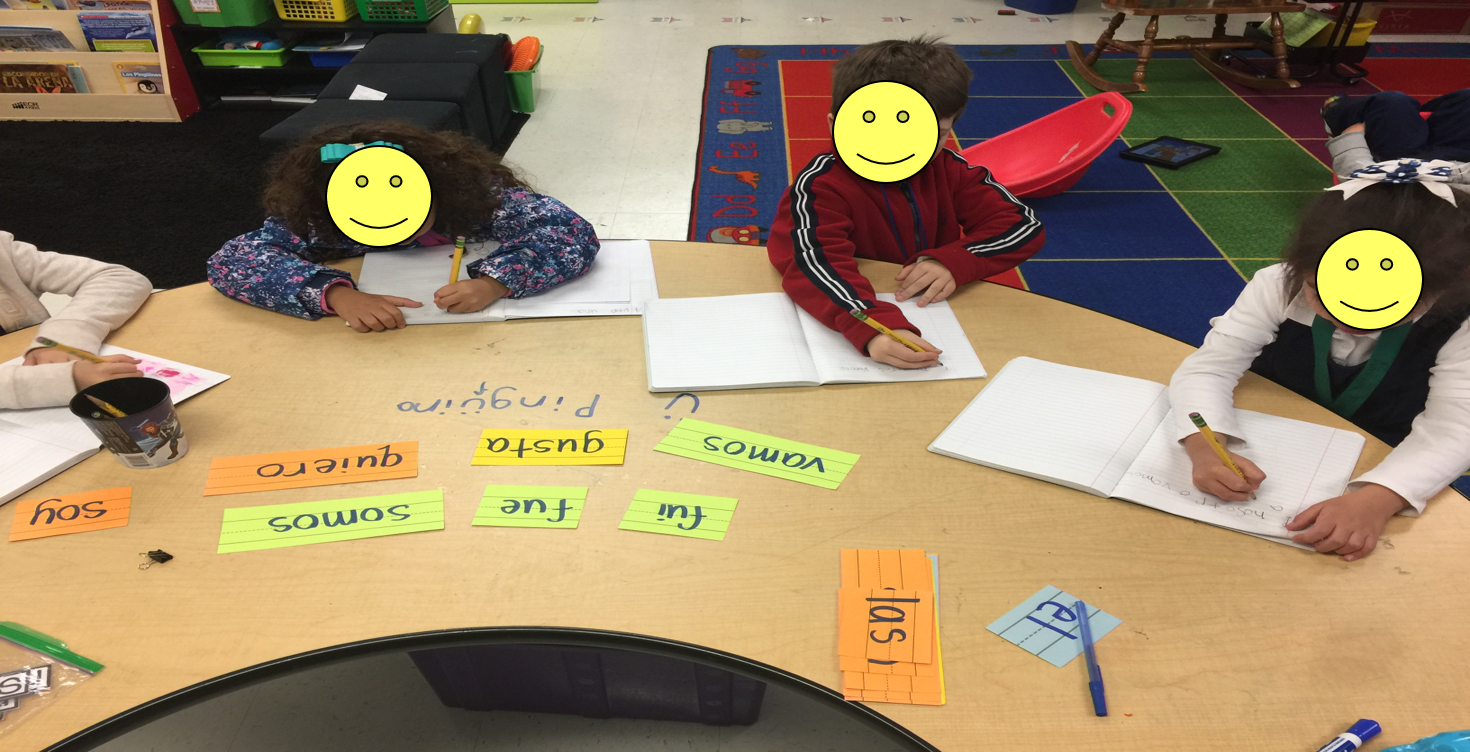
I’m including this resource from the Center for Applied Linguistics to reference when thinking about your dual language program’s organization and structure:

http://www.cal.org/twi/initialliteracy.pdf

Filed Under: dual language, organization, schedules

Guided Reading K-2nd

May 15, 2020 by Laura Pantin

Guided reading is one of the most important parts of any elementary school classroom. In dual language classrooms that should be no different! As Dr. Jose Medina (2017) states,  “Guided reading, at its core, is a targeted, specific, and planned instructional activity that helps students improve reading fluency, gain greater comprehension, practice literacy reading strategies, and become strong independent readers…there has to be a specific teaching point….In dual language classrooms, guided reading must include work on metalinguistic and cross-linguistic connections; it is about biliteracy instruction and not English literacy instruction”. Therefore, guided reading time should ultimately include the four literacy skills – speaking/hablando, writing/escribiendo, reading/leyendo and listening/escuchando.

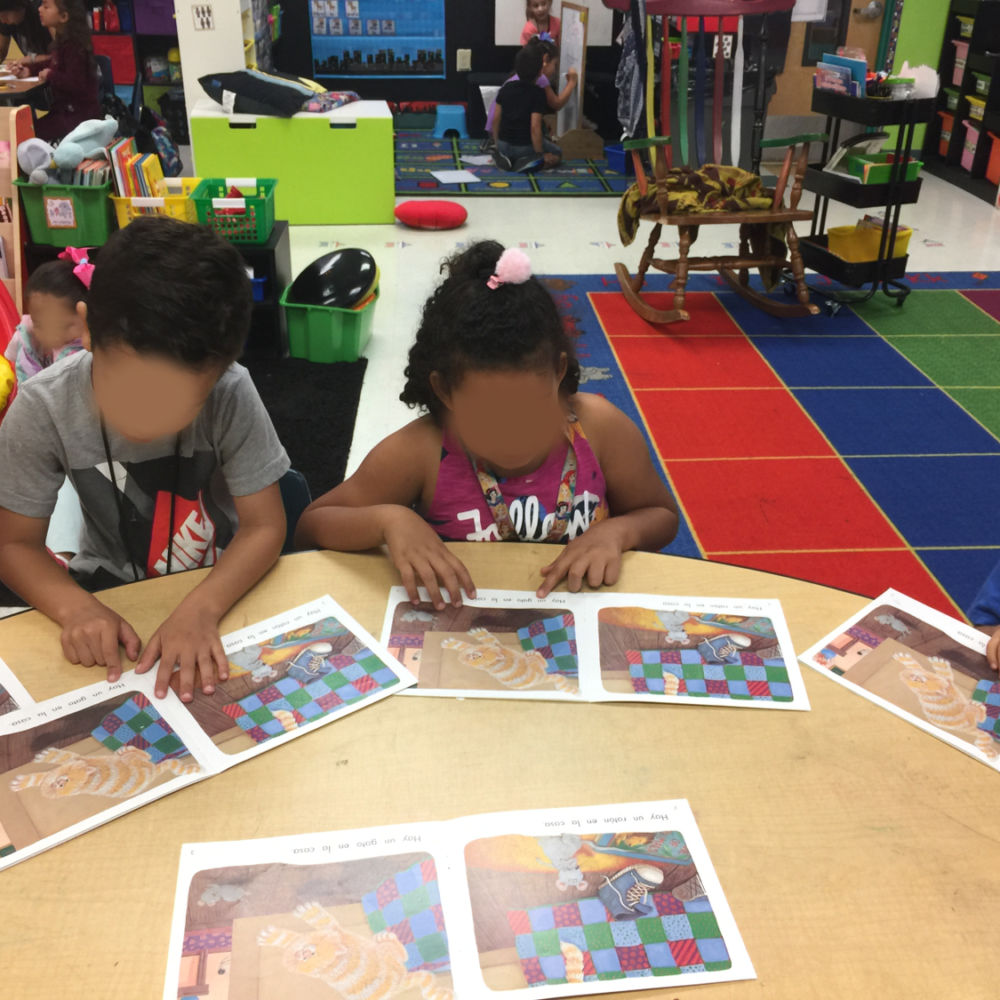
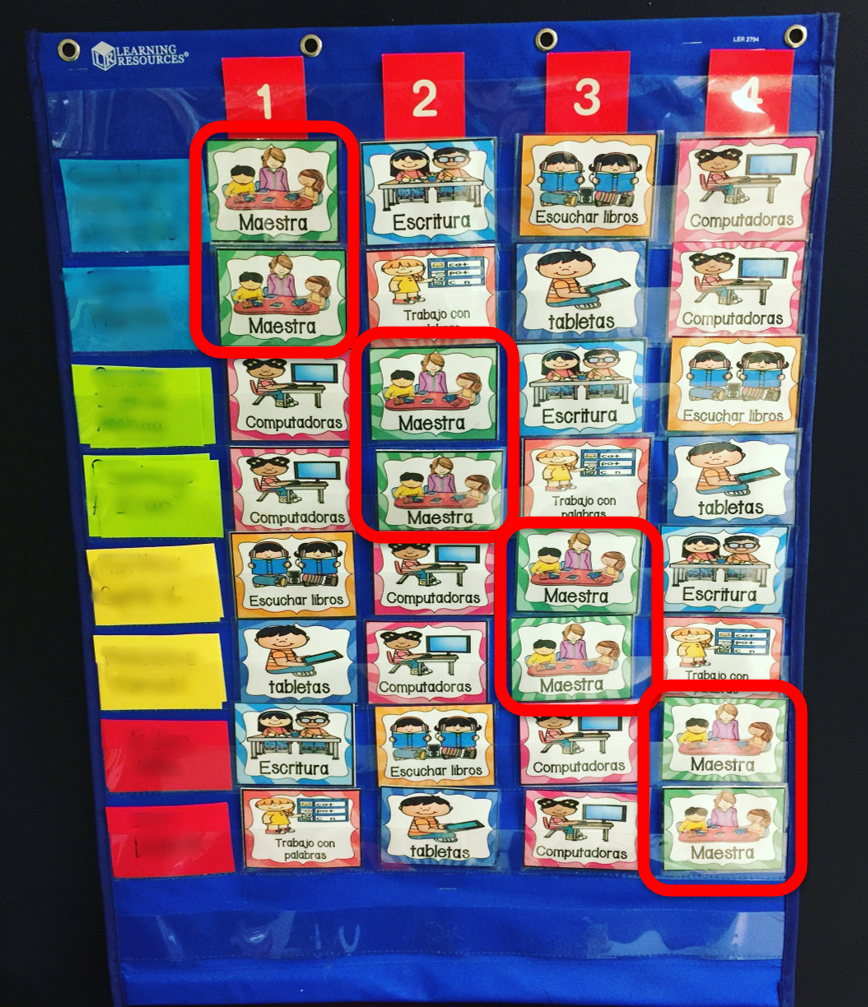
This is how I set-up my center rotations and the “Maestra” rotation is the guided reading time:

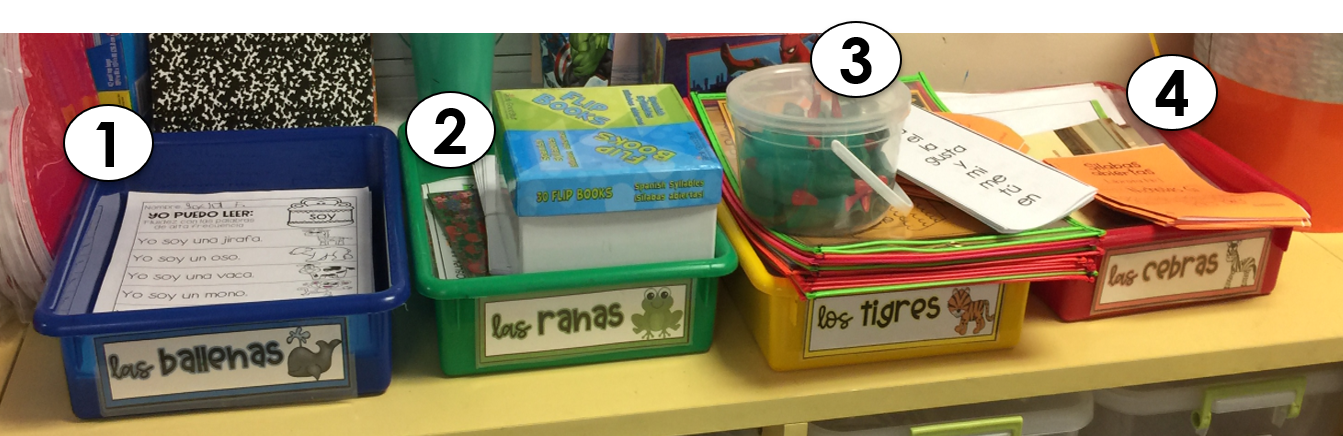
My guided reading set-up looks like this:

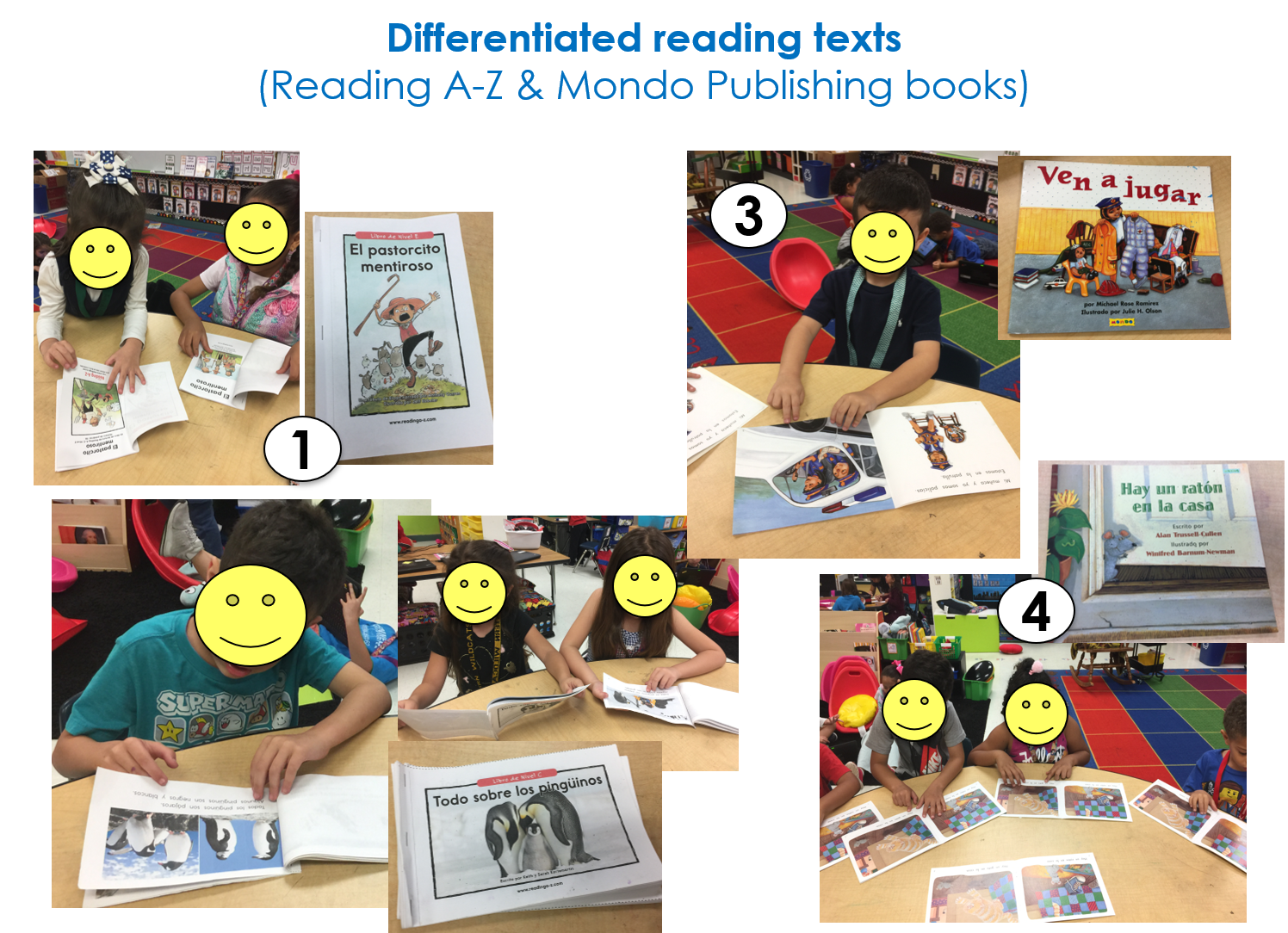
There are four bins to represent my four different groups. Each bin contains differentiated materials and activities for the week for each group.

My guided reading layout looks like this (and takes about 20 minutes):

1.Independent leveled work

2.Sight Words/Vocabulary/Words-of-the-Week activity

3.Reading/Reading comprehension

4.Reading fluency/Oral Language

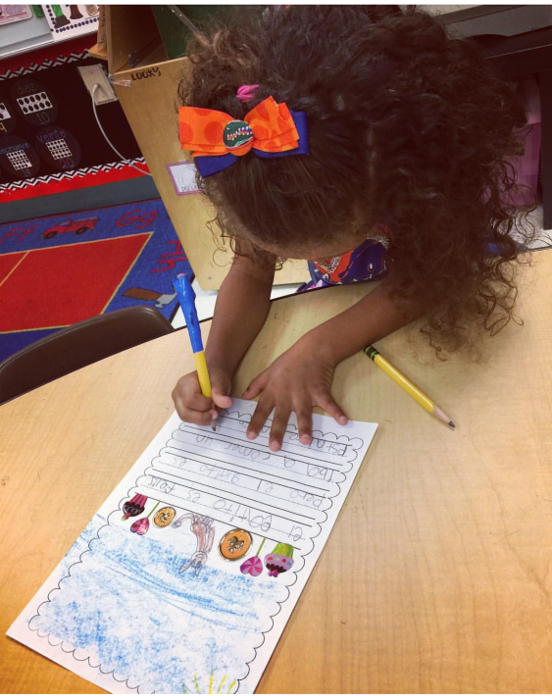
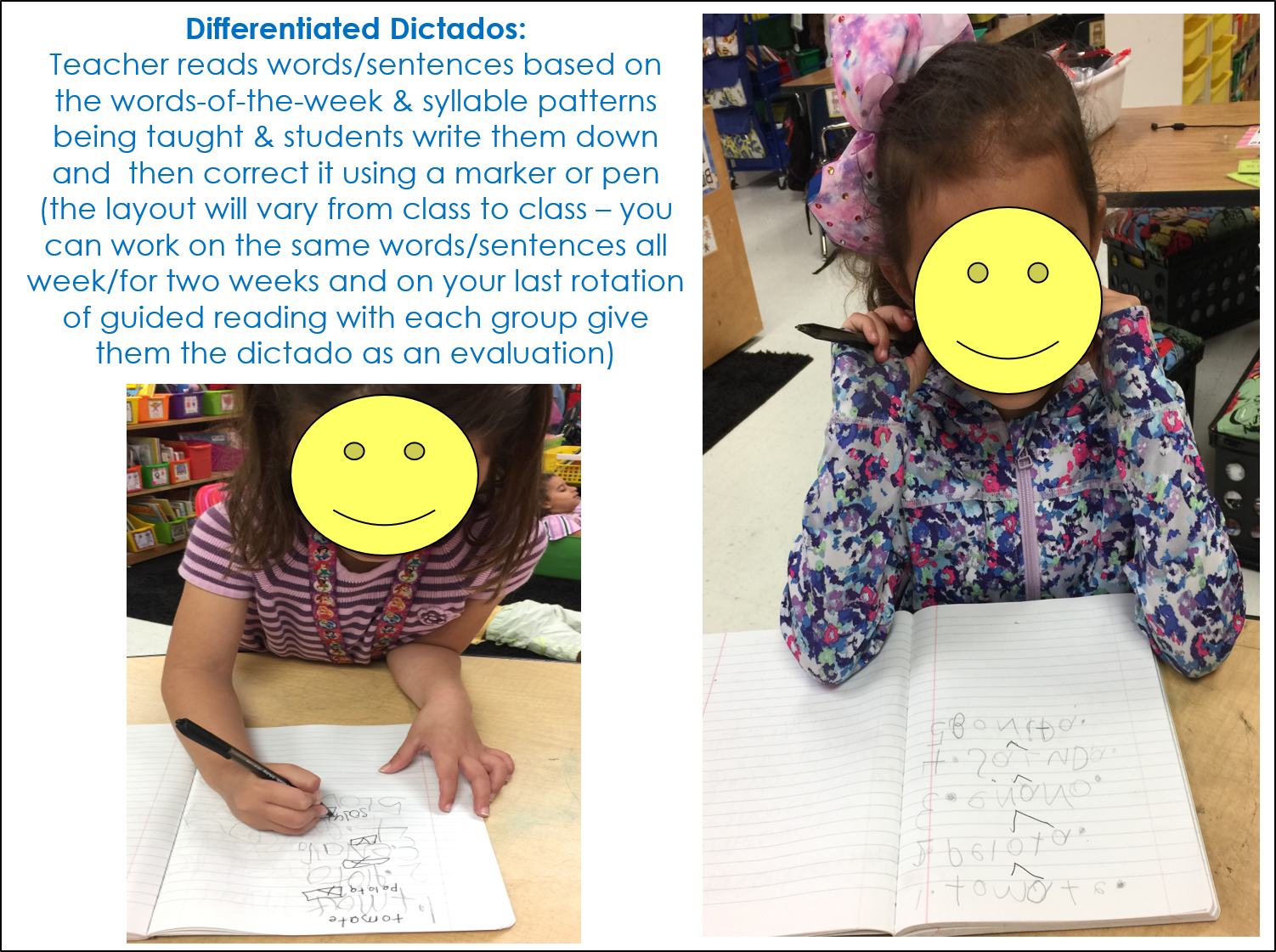
5.Writing (lecto-escritura)

I will go into what I do in each part of the guided reading layout and examples of activities for each:

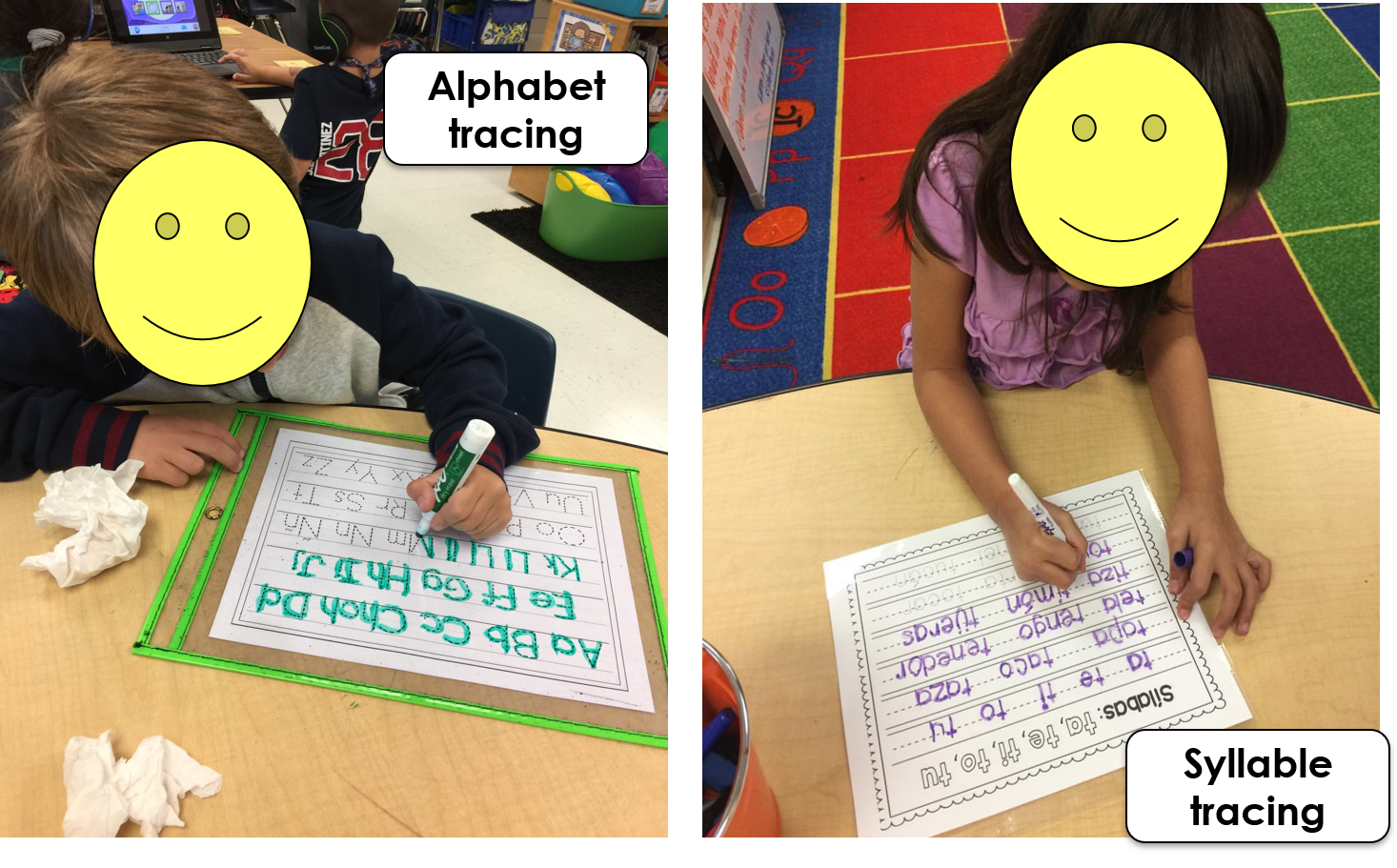
1. Independent Leveled Work (trabajo independiente):

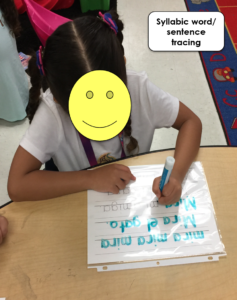
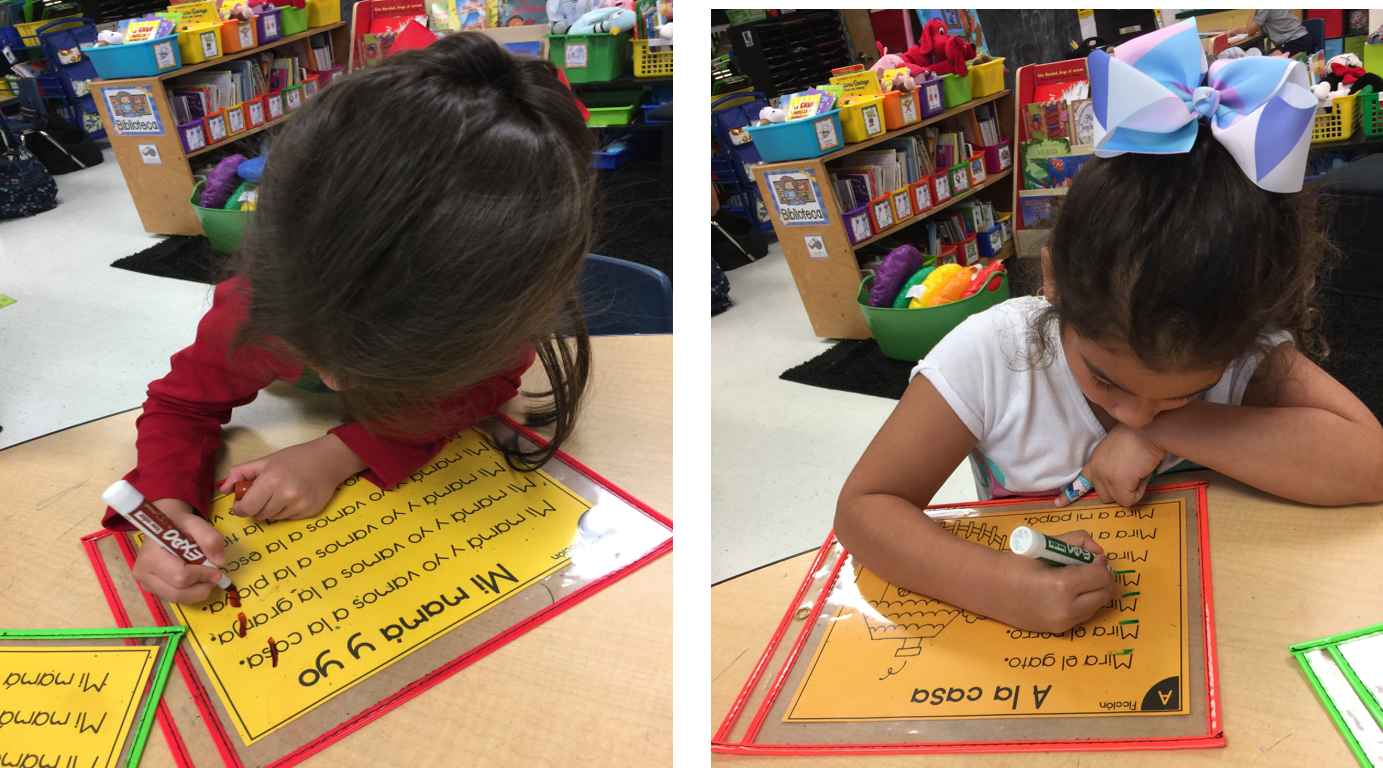
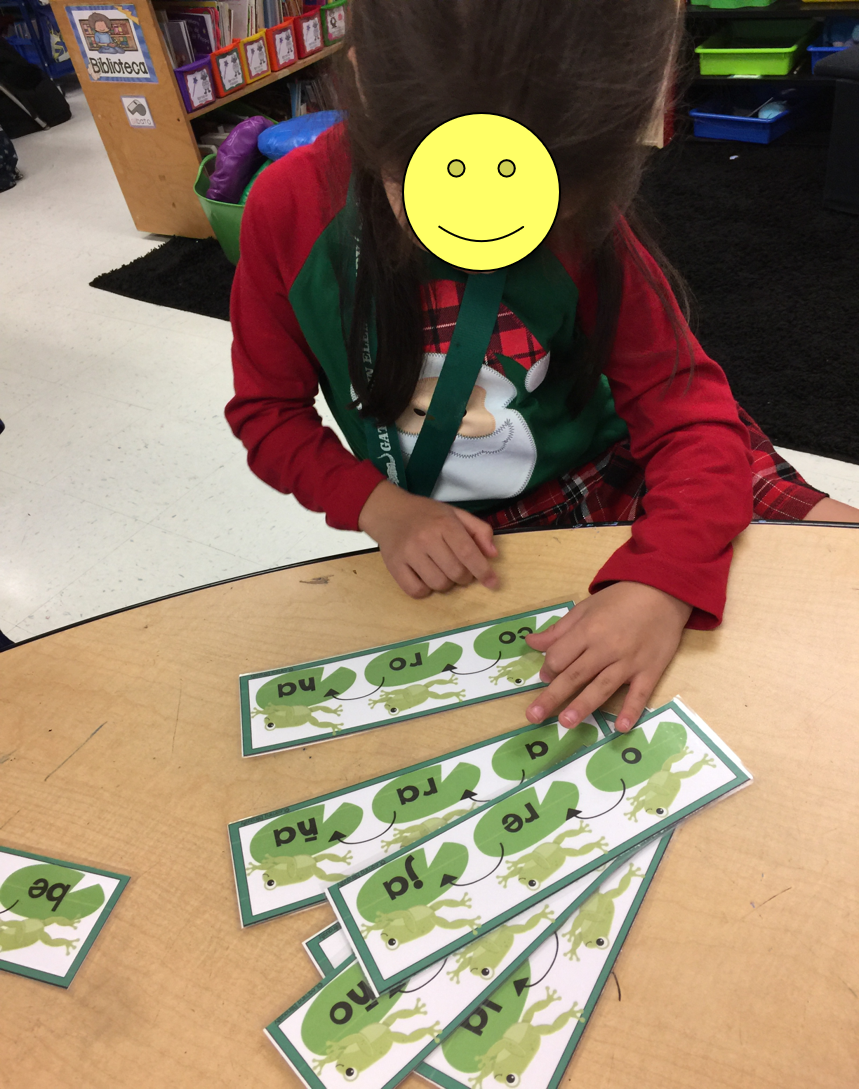
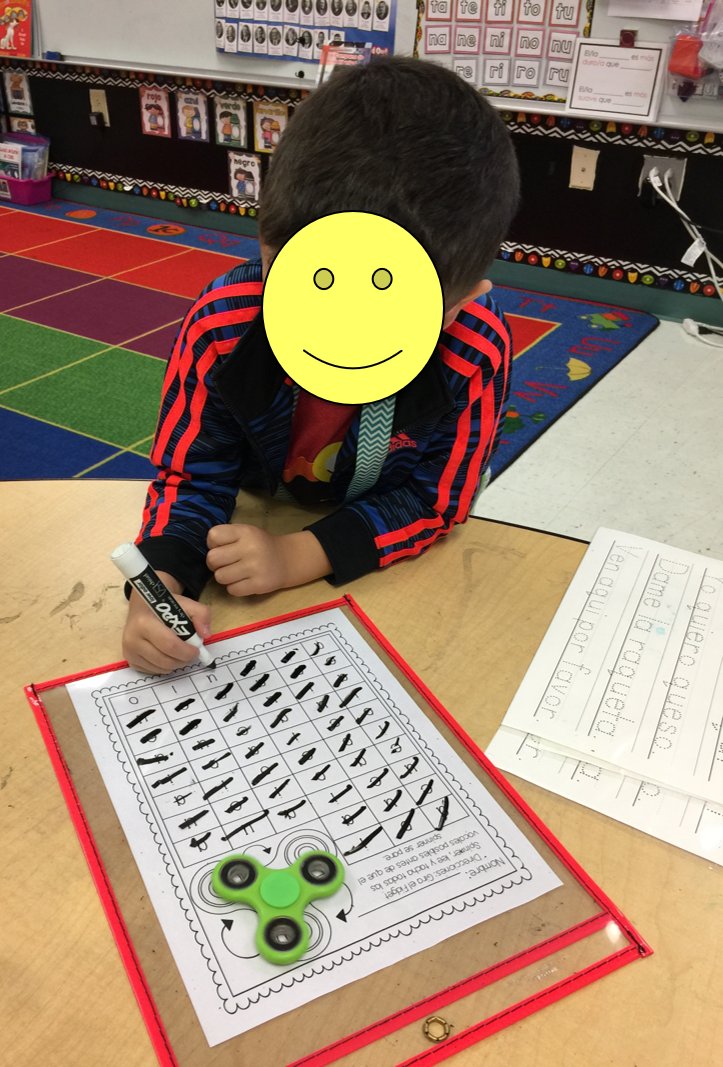
  • Tracing (alfabeto, vocales, sílabas abiertas, sílabas trabadas, frases, palabras importantes, oraciones
  • Reading independent books (books you’ve read together before or are appropriate for their level)
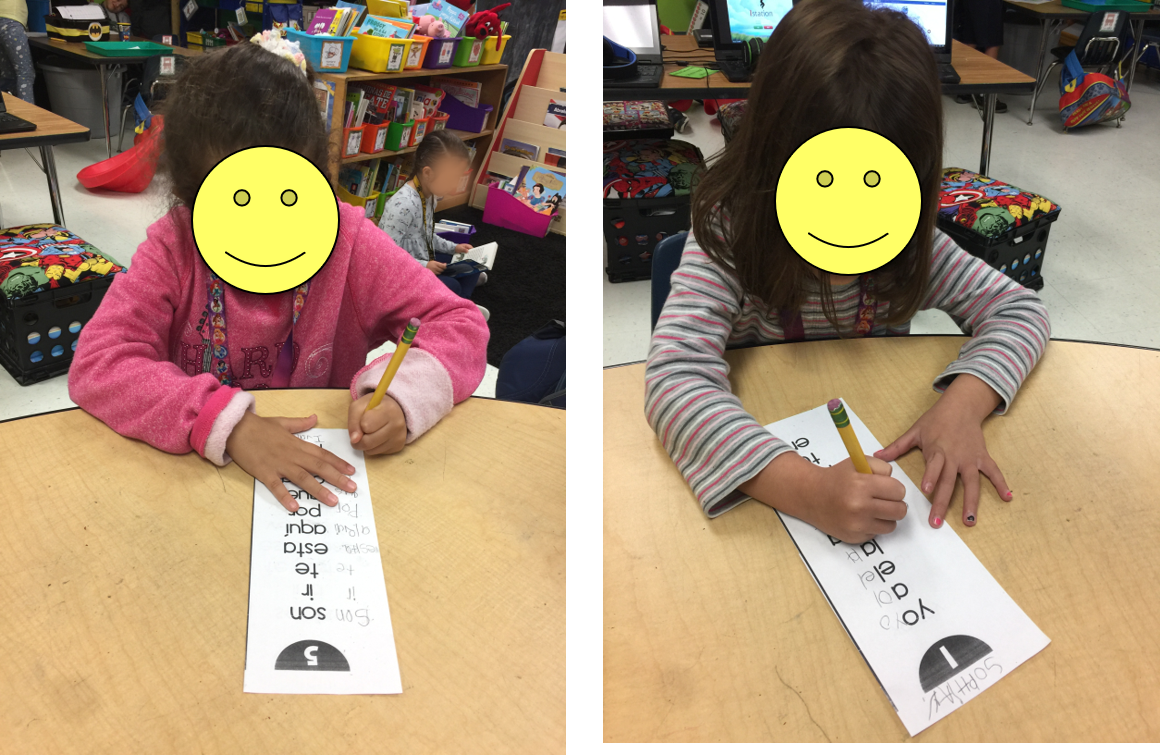
  • Sight Words/Vocabulary/Words-of-the-Week activity

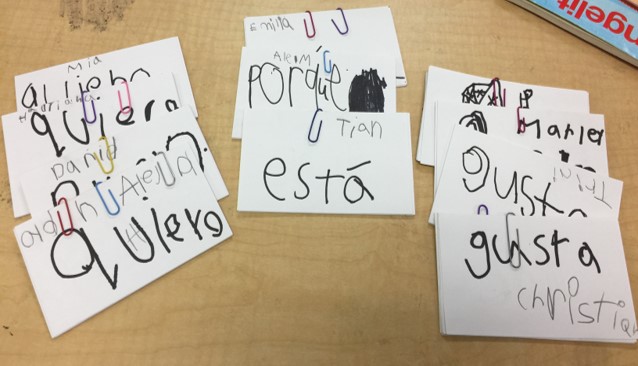
2. Sight Words/Vocabulary/Words-of-the-Week activity (Palabras de alta frecuencia/Vocabulario/Actividades con las palabras de la semana)

  • Introduce vocabulary using TPR—Total Physical Response (aplausos, movimiento físico (de los brazos, las manos) – don’t be afraid to get your students active during guided reading!
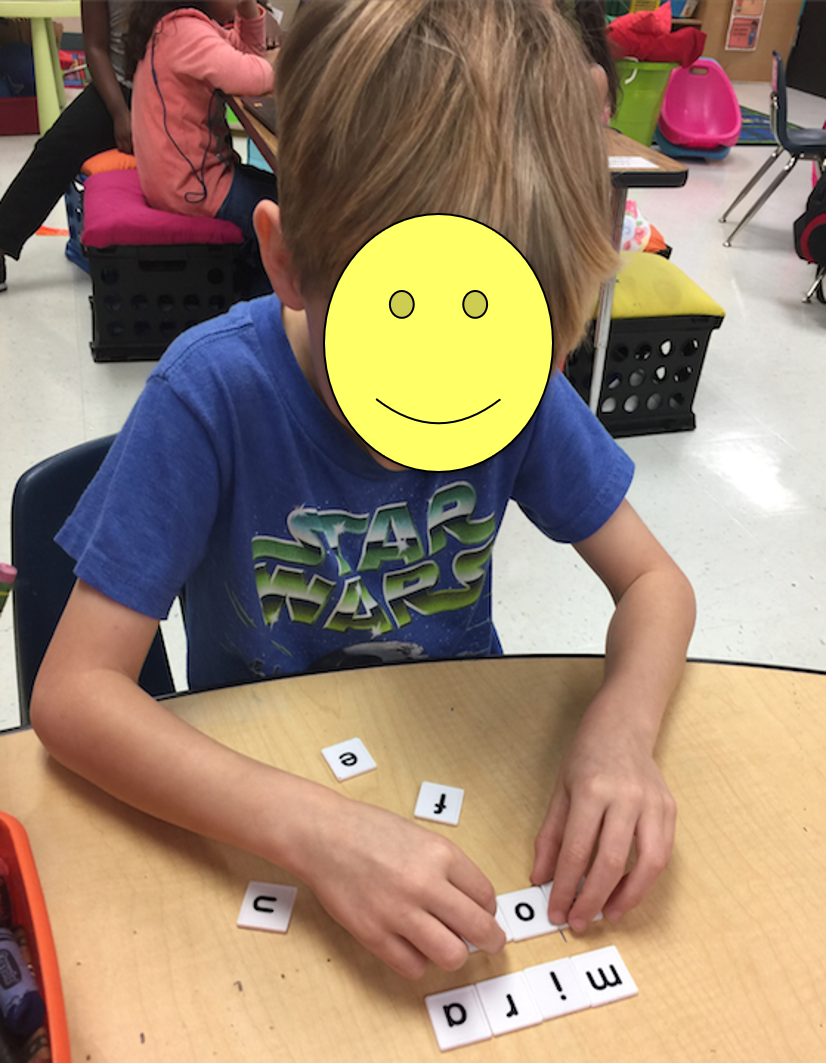
  • Work with the words you have been teaching (trabajar con las palabras que has enseñado durante la semana/las semanas anteriores usando juegos y actividades interactivas)

  •  

3. Reading/Reading comprehension (lectura/comprensión lectora)

  • Antes de leer un libro:
    • Paseo por el libro–mira las ilustraciones
    • Mirar la estructura del texto
    • ¿De qué crees que se tratará el libro? ¿Por qué?
  • Leer el libro
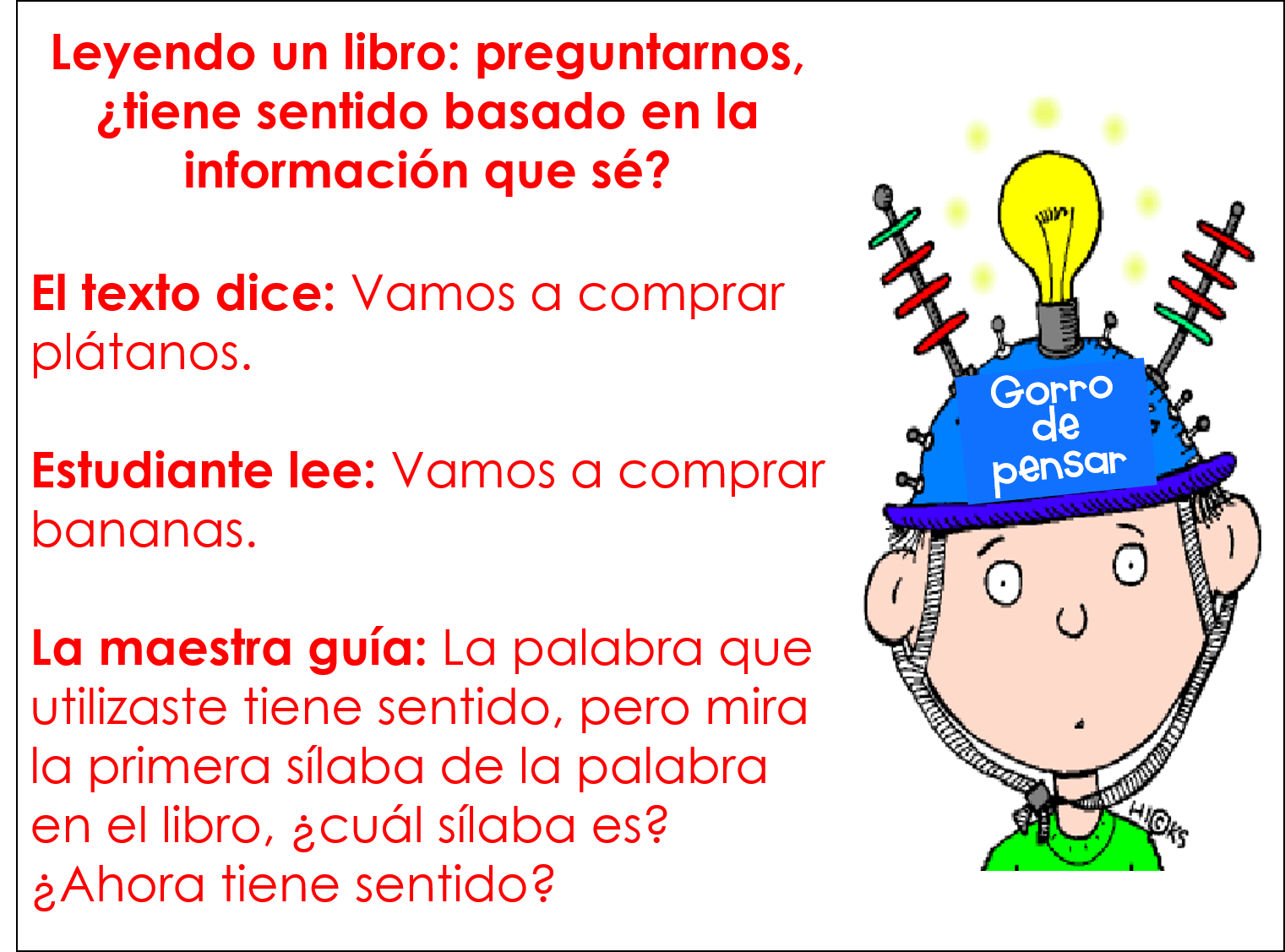
  • Cuando el estudiante se detenga en una palabra o diga la palabra en ingles o una palabra incorrecta, ¿qué estrategia podrías utilizar en ese momento para ayudar al estudiante?
  • Después de la lectura
    • Preguntas: (1) Sobre el texto y (2) Mas allá del texto
    • Hablen sobre el cuento (Taxonomía de Bloom)

4. Reading fluency/Oral Language (Fluidez de lectura / lenguaje oral)

La fluidez de lectura es la capacidad de leer con precisión, sin problemas y con expresión. Los lectores con fluidez reconocen las palabras automáticamente, sin tener problemas con los problemas de decodificación. Suenan naturales, como si estuvieran hablando. La fluidez es importante porque une el reconocimiento de palabras y la comprensión.

5. Writing (lecto-escritura)

La lecto-escritura implica un proceso en el cual están involucradas diferentes etapas en las que se producen adquisiciones que tienen que ver con el descifrado, la comprensión, interpretación, composición y redacción. This includes: deciphering, understanding, interpretation, composition and writing.

Filed Under: guided reading, kindergarten

Daily Morning Messages in Kinder

May 13, 2020 by Laura Pantin

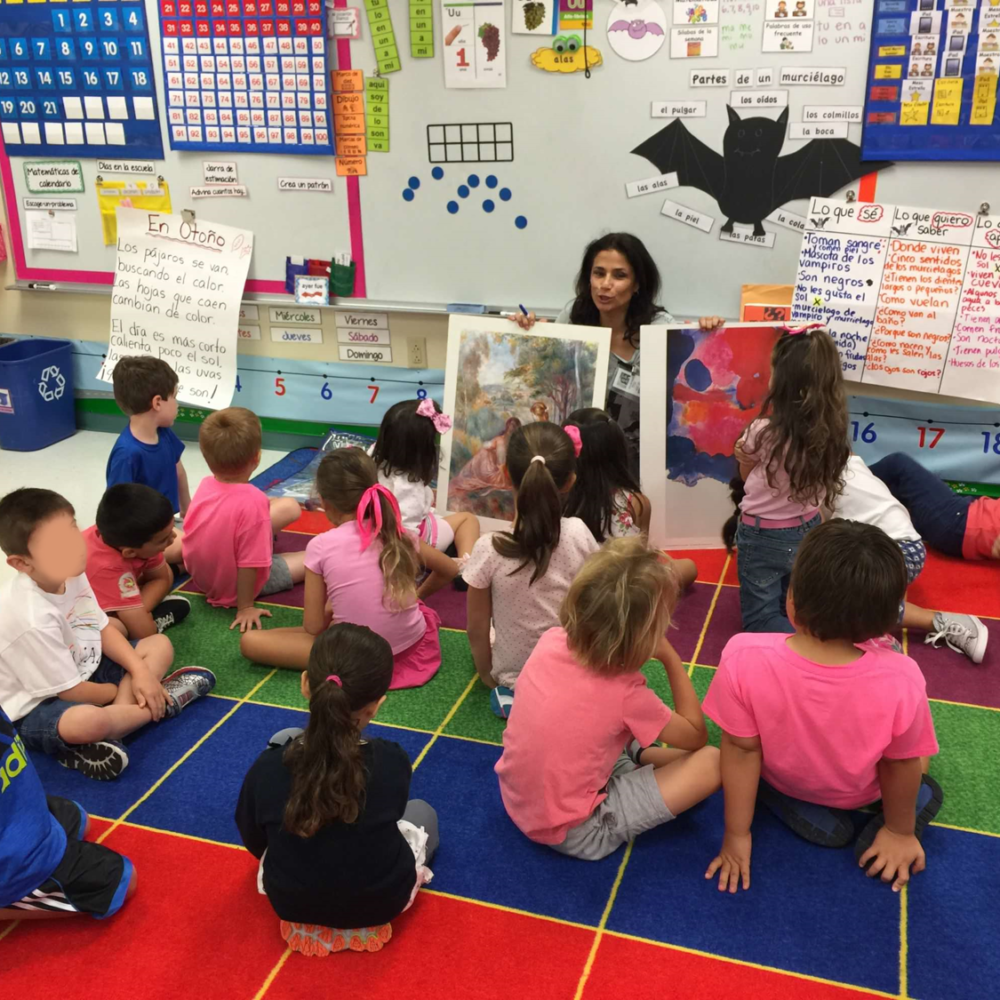
Teaching the young ones, especially in a dual language program, comes with its’ set of added challenges. How will we get our students talking? How will we build a classroom community every day and make sure our students are talking in the target language every day? One of the main tools I utilized when I taught Kinder Dual Language was having a daily morning message.

Yes, I know… program schedules are usually very tight and we are always on-the-go, but it’s crucial to allow at least a couple of minutes for targeted vocabulary and oral language practice on a more “social” level (on top of the academic vocabulary and oral language your students get during centers and whole group lessons, etc). Using a daily morning message during a short “whole group circle time” allows for children to get comfortable, lower their anxiety level and get talking!

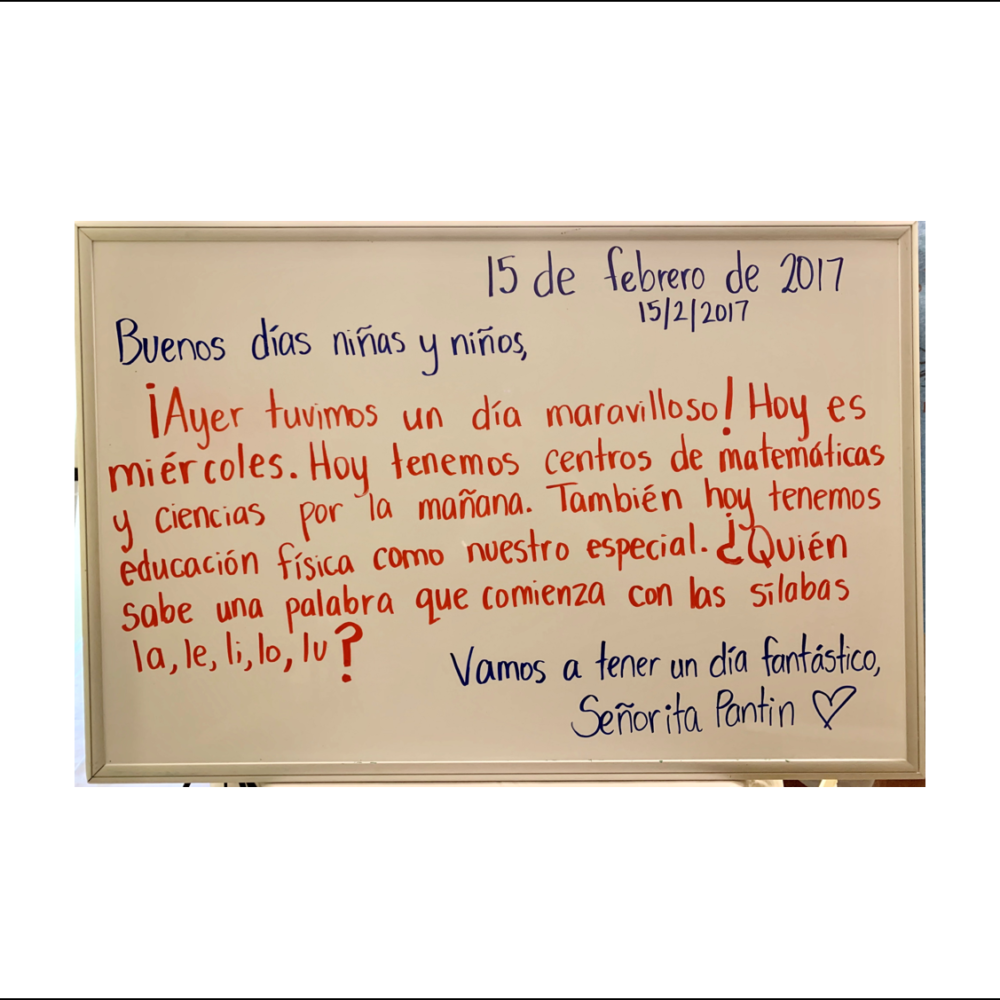
I think that this circle time and incorporating that daily message is also important for several reasons, one being that it provides a routine that children learn to expect. However, another added benefit is that it also builds students linguistic confidence and sets up the rest of the day nicely. After having done this every day, I had many children repeating my greeting (“Buenos días niños y niñas”) and my closing line (“Vamos a tener un día fabuloso/maravilloso/extraordinario/fantástico, Señorita Pantin”). I loved seeing my students saying these words and following along because they are speaking in Spanish and learning some words/phrases in the target language!

I always started the message by saying how our day went yesterday (always positive!) and I always included the Special that we have that day so that students knew what to expect. I also included what we are doing that morning together (since they switched after lunch and went to the English side). Something that I also started doing more after the first initial messages is making my punctuation marks thicker in order to point them out visually for students when they are looking at the message and hearing me read it. Since in Spanish we use a question mark at the beginning and at the end of a sentence, I made them thick so that students can start distinguishing this difference in both of the languages. 

I think that this time together was very important in setting up the day and having students know the expectations for their morning. For dual language programs, in the target language, it is essential to provide many opportunities for the students to hear the language during a routine but also to have a chance to talk. I tried to provide children with opportunities to review some of the ideas/concepts we had worked on/were currently working on during the week. Incorporating questions in the morning message allowed for my kids to become involved and feel at ease in answering. I also modeled answers and would include sentence stems to help them navigate forming their own answers! Even with a tight schedule, these little moments are significant and important in fostering community, developing linguistic confidence and setting up a successful day of learning (and fun of course!).
Filed Under: bilingual education, dual language, kindergarten Tagged With: bilingual education, bilingualism, dual language, dual language immersion, kindergarten, spanish

Como enseñar las vocales en español

May 12, 2020 by Laura Pantin

Para enseñar las vocales, lo mas importante es enfocarse en una vocal cada semana. Esto significa que le enseñanza de las vocales durará 5 semanas (a, e, i, o, u). Sigue esta esquema cada semana para organizar tu enseñanza de cada vocal:


ESQUEMA

  1. “Los amigos de las vocales” (Introduce el sonido de las vocales)
  2. Videos/Canciones de las vocales
  3. Introducir el poema de las vocales
  4. Mapa de burbujas de las vocales
  5. Libreta de las vocales
  6. Actividades de alfabetización enfocadas en las vocales
  7. Repaso de las vocales

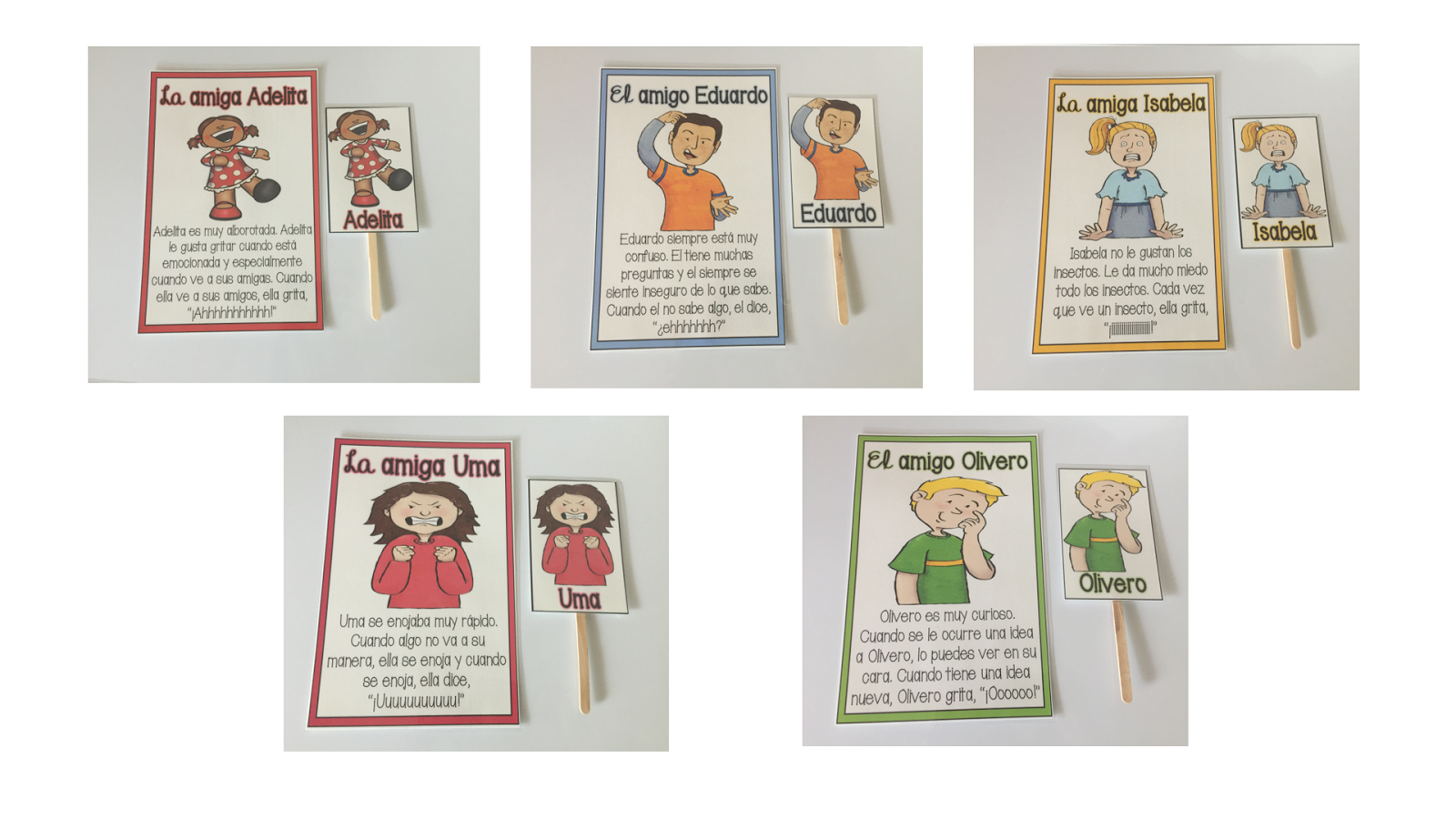
Paso 1: “Los amigos de las vocales”

Para introducir cada vocal, introduce la amiga/el amigo y lee su cuento. Después, dile a los estudiantes que repitan el sonido que hace ese amigo.

Paso 2: Video/Canciones de las vocales
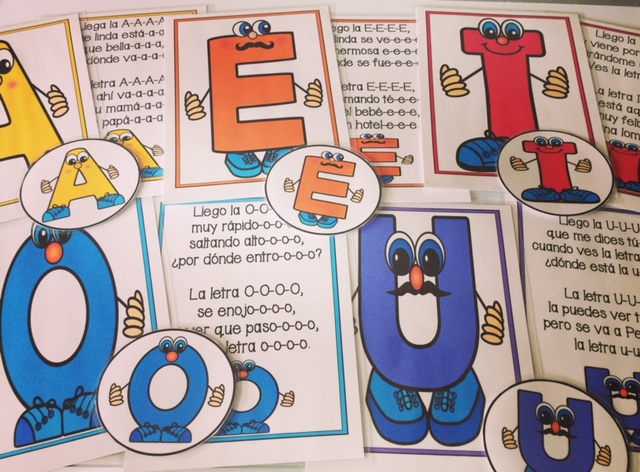
En YouTube hay muchos videos buenos de las vocales y a los estudiantes les encanta verlos. También, utilizo unos “chants” o canciones de las vocales que creé que ayudan a los estudiantes repetir los sonidos y nombres de cada vocal.

Vowel Chants in Spanish  –you can listen to the chants here!
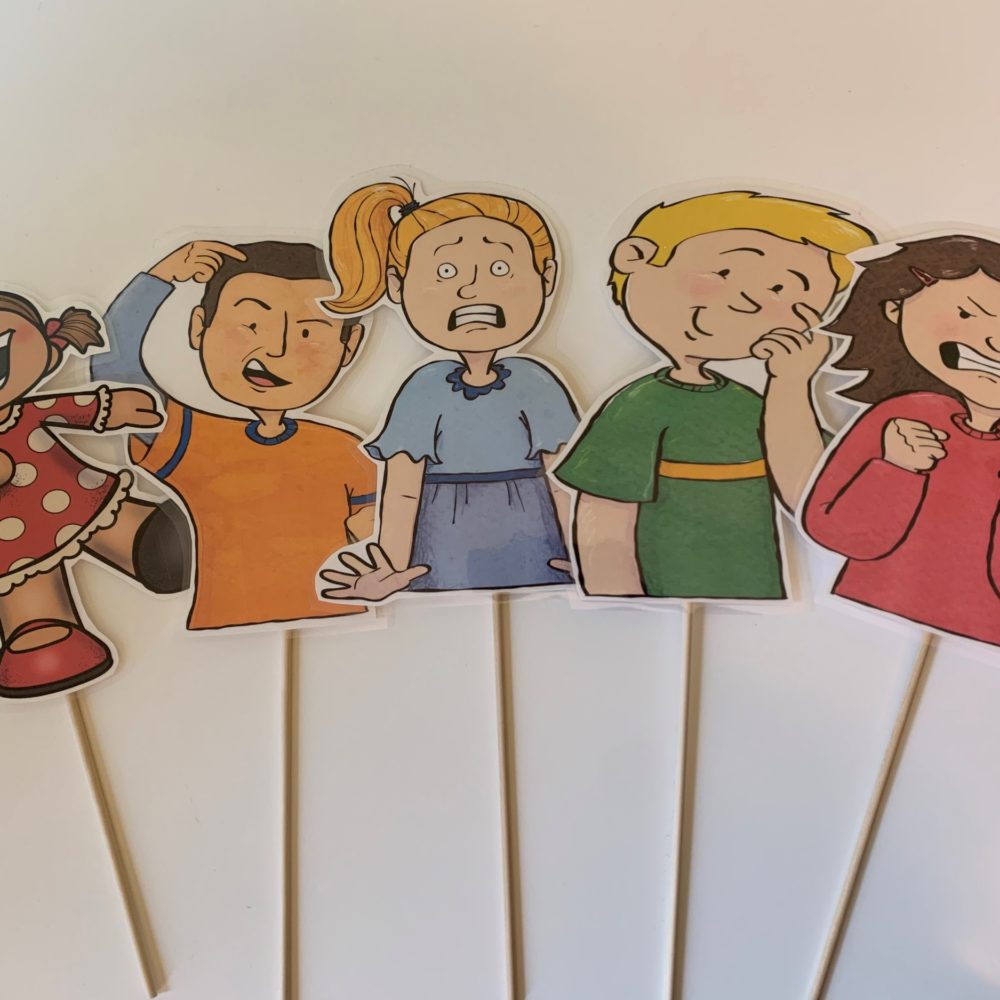
Vowel Pack in Spanish  — if you want to purchase the vowel pack/chants!Paso 3: Introducir el poema de las vocales
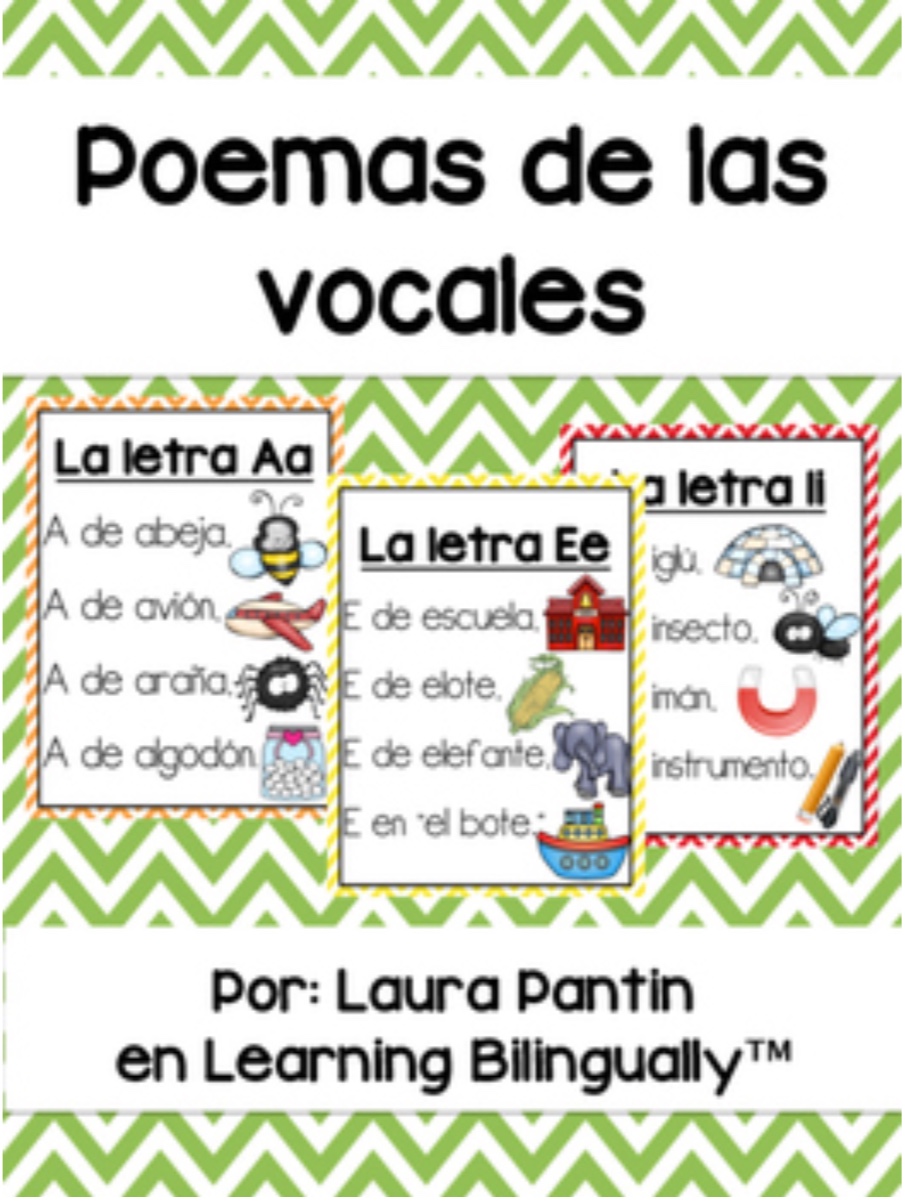
Para introducir el poema de la vocal de la semana, lo muestro usando mi proyector y primero lo leo yo. Después, les digo a los estudiantes que repitan el poema mientras yo lo leo. Por ejemplo:
Maestra: A de abejaEstudiantes: A de abejaMaestra: A de aviónEstudiantes: A de avión
Al final de la semana, dejo que los estudiantes tomen turnos con el “pointer” y dirigiendo la lectura del poema a la clase entera. ¡Les encanta hacer esto!

Paso 4: Mapa de burbujas de las vocales

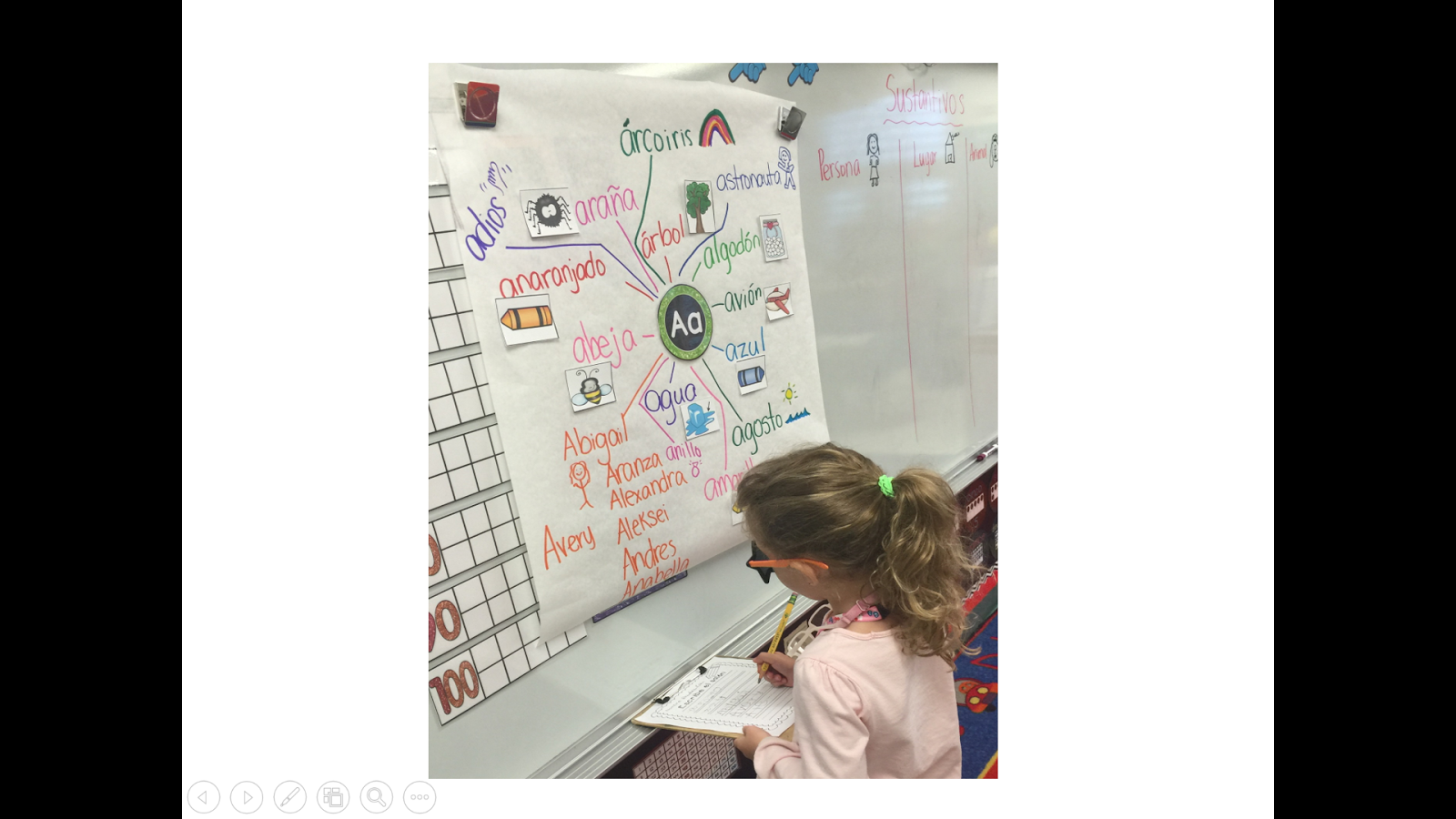
En grupo entero, dices: “Vamos a pensar en palabras que comienza con la vocal Aa. Hmmm. ¿Quién sabe una palabra que comienza con Aa?” Aquí puedes dejar que los estudiantes se den una vuelta y hablen con un compañero de la alfombra (turn & talk). Después de unos minutos, haz la pregunta de nuevo. Mientras van diciendo palabras, escríbelas en el papel grande y pega la imagen (si no tienes una tarjeta con la imagen, dibújala – recuerda que los visuales son muy importantes). Cuando terminen, deja el cartel en una pared.

Paso 5: Libreta de las vocales

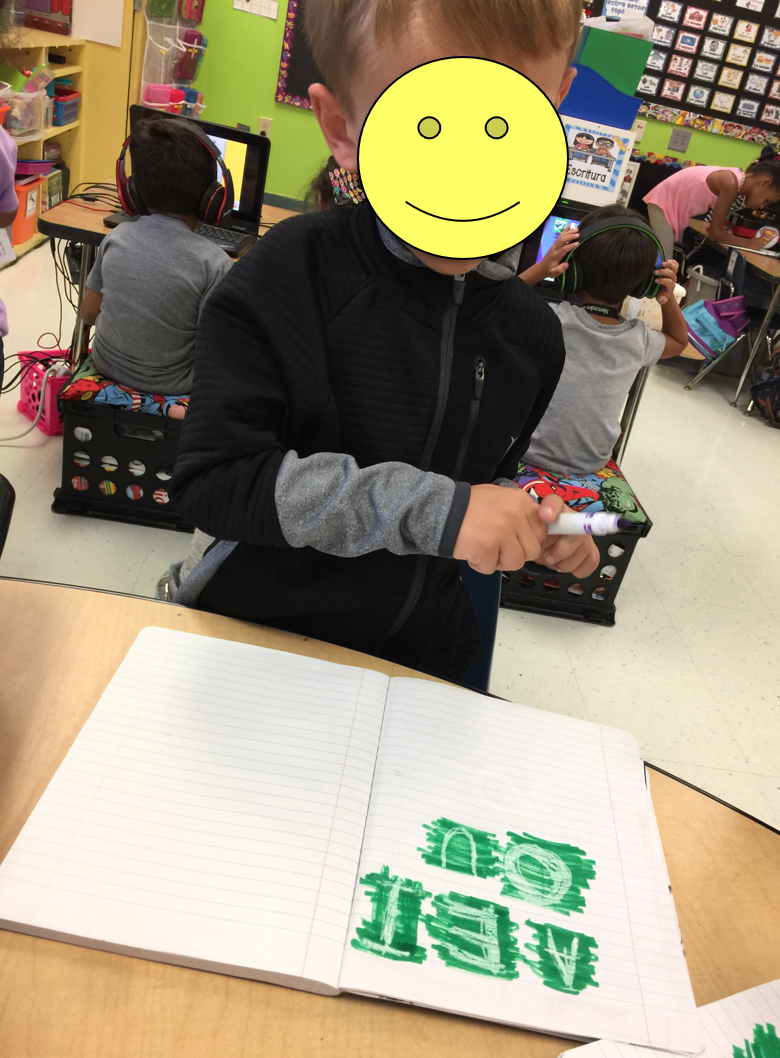
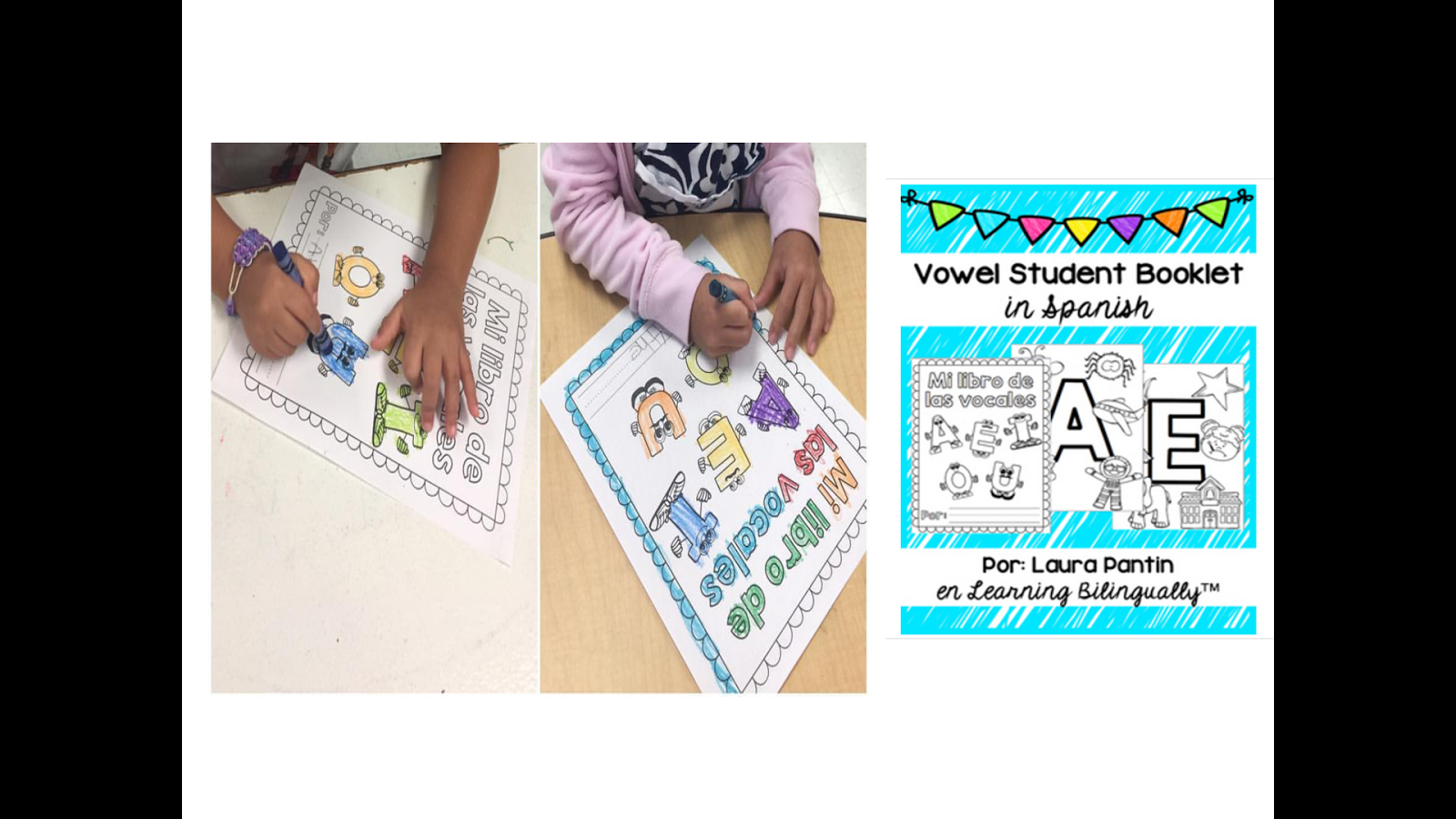
Al principio de la unidad sobre las vocales, cada estudiante debe recibir una libreta de las vocales. Deja que cada estudiante escriba su nombre y coloree la portada de la libreta. Después, pon todas las libretas en un lugar asignado del salón donde los estudiantes saben donde están. Cada semana, después de que hayan hecho el mapa de burbujas de las vocales (no en el mismo día), deja que cada estudiante complete la pagina que corresponde a la vocal de la semana. Esto los ayuda a repasar la vocal y al mismo tiempo tener una libreta que después podrán leer ellos independientemente porque reconocerán los dibujos.

Vowel Booklet in Spanish
Paso 6: Actividades de alfabetización enfocadas en las vocales

  • Vocal (sonido) inicial que falta
  • Vocal (sonido) final que falta
  • Emparejar un dibujo con su vocal inicial
  • Rompecabezas de las vocales
  • Determinar la vocal inicial del dibujo
  • “Escribe el salón” de las vocales

Otros Recursos:

  • Missing Vowels in Spanish
  • Vowel Game in Spanish
  • Back to School Vowel Game in Spanish

Paso 7: Repaso de las vocales
Hay varias maneras de repasar las vocales en después de las 5 semanas. Como las vocales son una base fundamental del idioma en español, dedica una semana después de las 5 semanas para repasar lo que han aprendido.

  • Mapa/Grafica en grupo entero de todas las vocales
  • Utilizar WheelDecide para repasar y practicar las vocales
    • Cada estudiante deben tener un pizarrón y marcador (o un papel/lápiz). Anteriormente, pon palabras que comienzan con todas las vocales en la rueda. Gira la rueda y los estudiantes deben leer la palabra y después escribirla en su pizarrón/papel propio.
  • Pelota de playa plástica
    • Escribe en una pelota de playa plástica una vocal en cada color (a, e, i, o, u, y en el ultimo color escribe “tu decides”). Los estudiantes deben estar sentados en un circulo en la alfombra. Tira la pelota y el estudiante debe decir una palabra que comienza con esa vocal. Después, pasan la pelota a otro compañero.

Filed Under: vowels

« Previous Page

Before Footer

Copyright © 2026 · Wellness Pro on Genesis Framework · WordPress · Log in